Behind the Scenes
Your Guide to Every Easter Egg and Cameo in Wonka’s The Golden Ticket
Did you spot them all?
By Melanie Whyte
Sept. 23, 2026
Wonka never does anything by accident — and neither does Wonka’s The Golden Ticket.
Since plucky paperboy Charlie Bucket first stepped into the factory in Roald Dahl’s beloved children’s novel more than 60 years ago, Wonka’s iconic candy land has taken many forms. The team behind the new reality competition series, now streaming, aimed to retain both the magical spirit of the book and the 1971 film adaptation Willy Wonka and the Chocolate Factory, leaving behind a treasure trove of fan-favorite references in the process.
“We just devoured everything that was Wonka-related and tried to create the most evocative and nostalgic experience that we could for the cast coming in to share in this world,” says showrunner Emer Harkin. “We really want to pay homage. That was always our directive.”
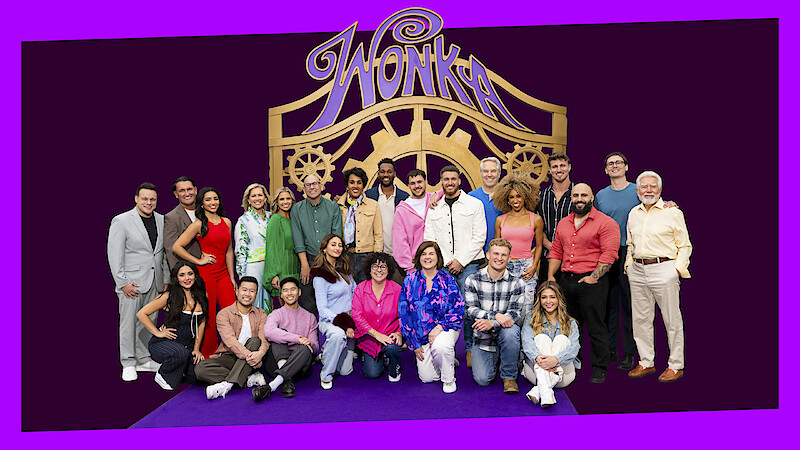
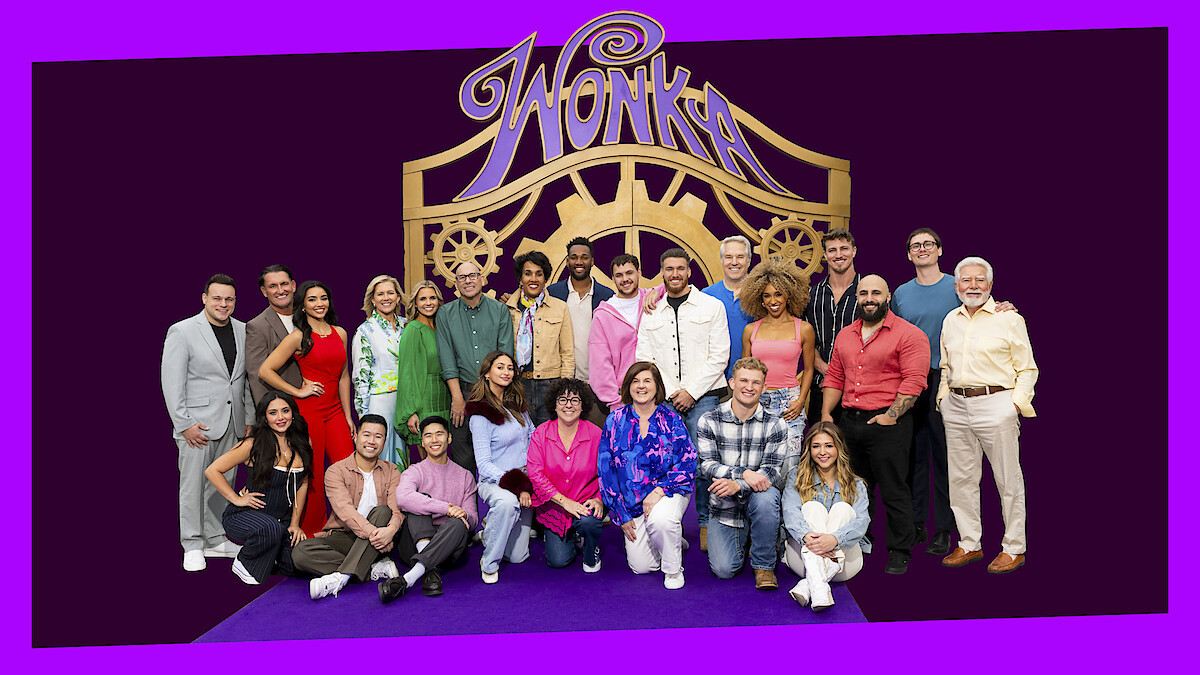
The series sneaks in plenty of direct callbacks for fans of the book and film — from a familiar face in the first episode and an Oompa-Loompa dynasty spanning two generations to everlasting gobstoppers and the extensive contract Wonka’s guests must sign before entering. As always, Wonka rewards those who pay attention: Keep reading to see if you spotted all the Easter eggs in Wonka’s The Golden Ticket.
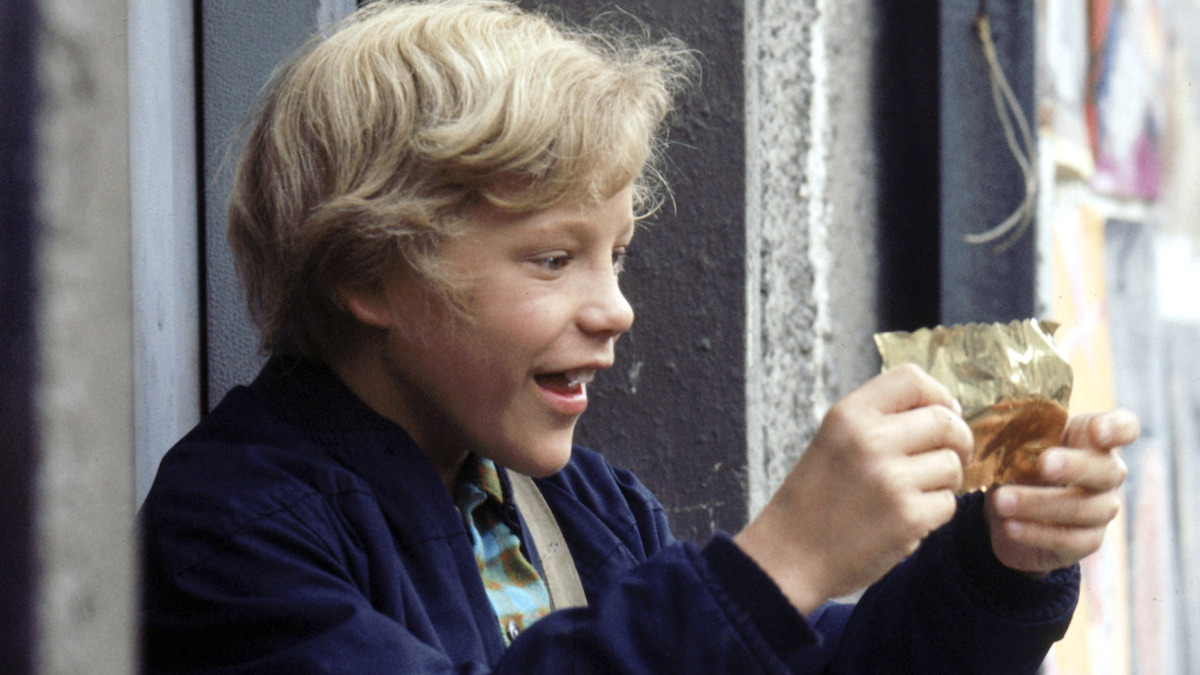
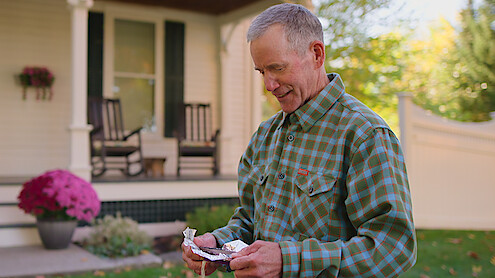
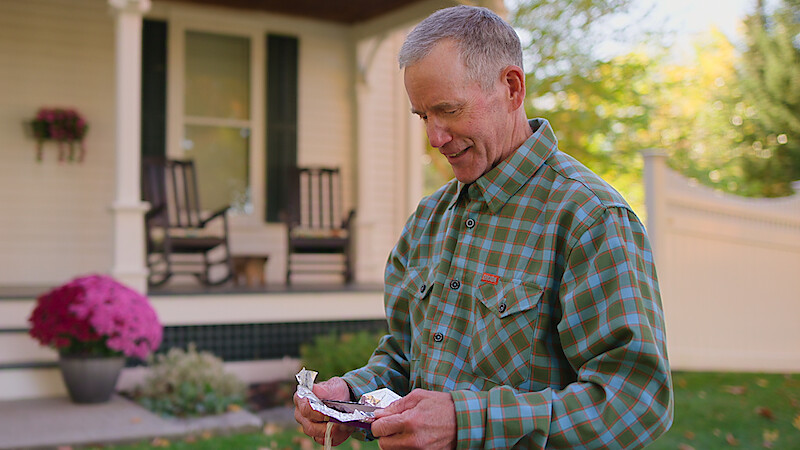
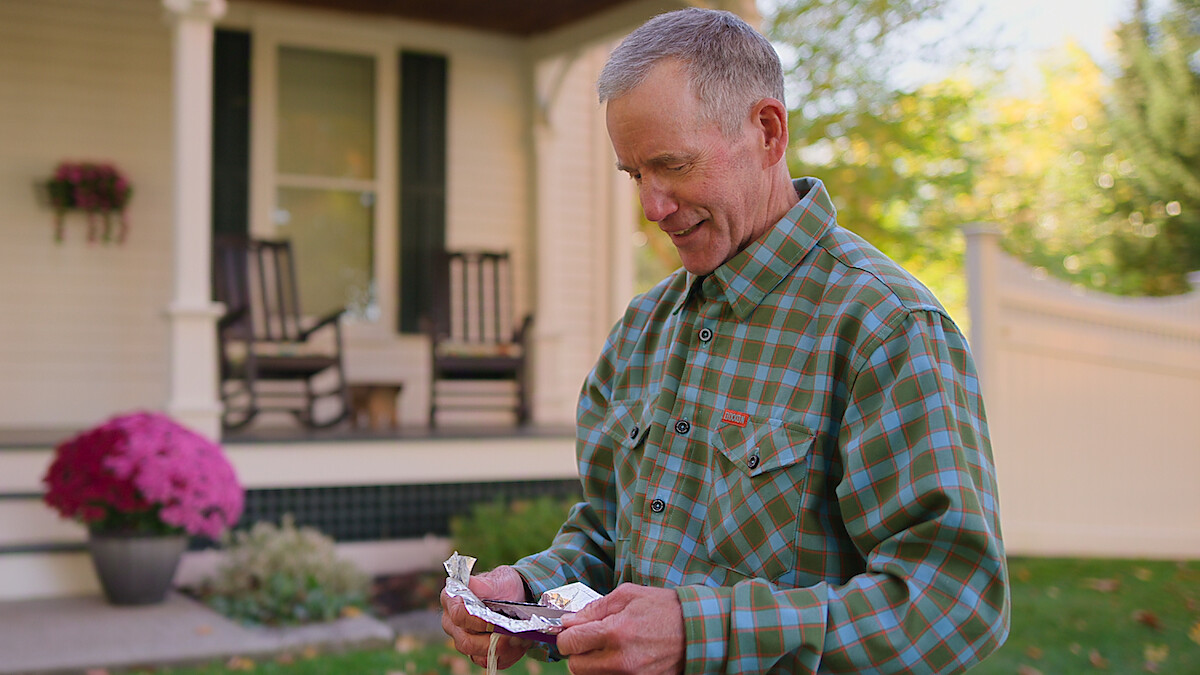
Blink and you'll miss him, but the sharpest Wonka-philes won’t. Tucked into the first episode’s montage of golden ticket discoveries is a face that started this whole story 55 years ago: Peter Ostrum, the original Charlie Bucket. Ostrum traded acting for veterinary medicine not long after the 1971 film wrapped, and has rarely resurfaced for anything Wonka-related since, which made landing him for even a fleeting cameo feel like its own golden ticket to the production. “It was so meaningful for all of us to get that blessing,” says Harkin. “To get [Peter] being Charlie and blessing our project in a way that he’s never done since the original movie was seismic for us.”
But, Ostrum isn’t the only cameo. Celebrity chef David Chang (Dinner Time Live with David Chang), Hot Ones host Sean Evans, and content creator star Zach King also make appearances.
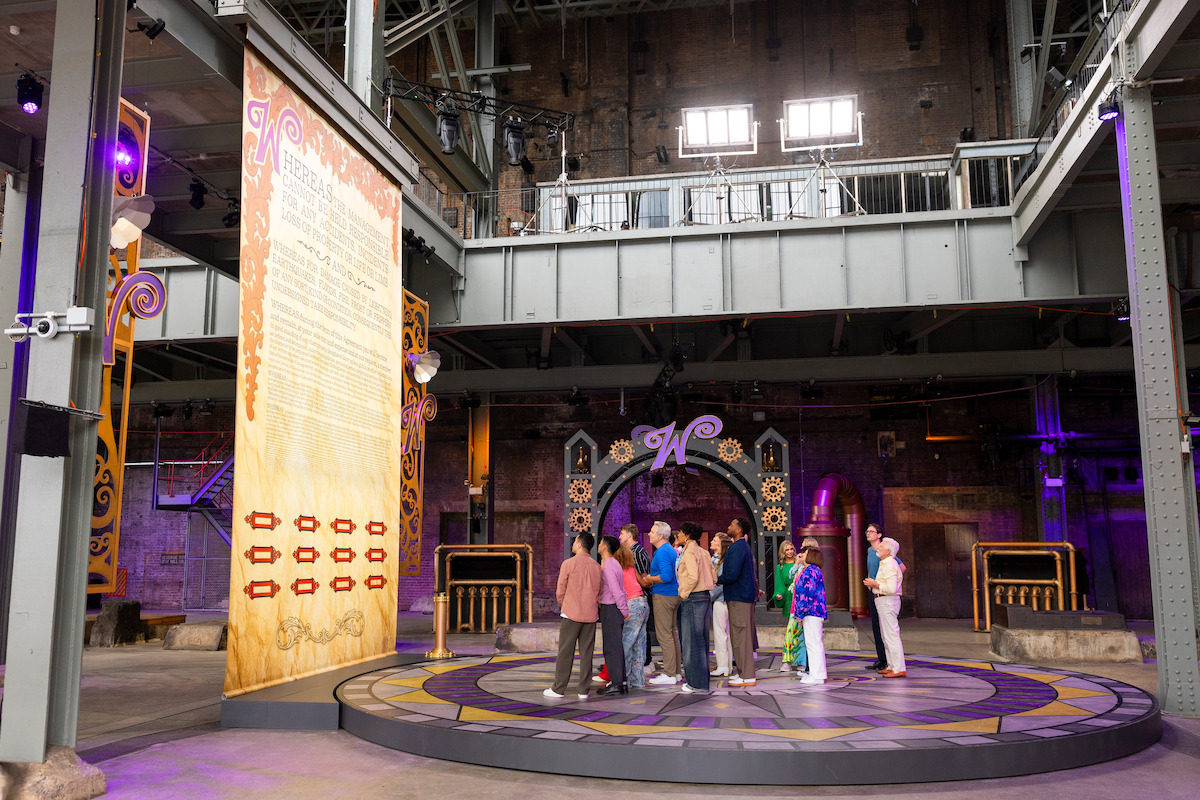
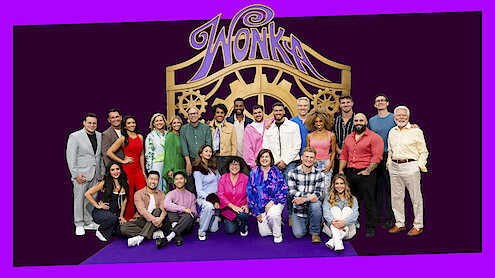
Just like in the 1971 film, all 24 contestants sign an enormous contract before entering the factory — and its subsections will matter. The massive scroll, with its almost illegible print, comes with a few terms and conditions. This time around, the order in which the contestants sign the contract has an impact on the outcome of the game. Whatever happens, remember this: “Management cannot be held responsible for any accidents, incidents, loss of property or life or limb. …”
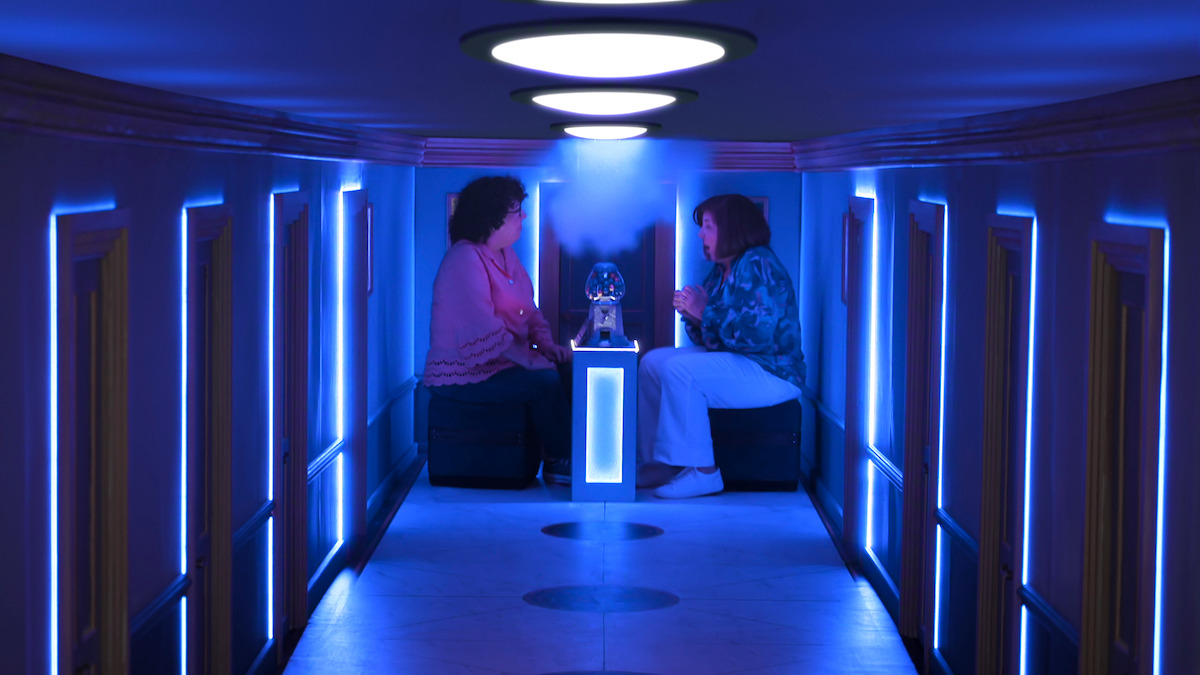
In the opening episode, the contestants face their first, vertigo-inducing challenge: the forced perspective hallway. Built to resemble the set piece from the 1971 film, the shrinking corridor features doors of decreasing heights and a sloped ceiling to create an awe-inspiring optical illusion.
The set piece proved to be a technical and creative challenge for the team. “It’s deceptive because it just looks like it’s one or two cameras shooting that hallway, but in the end, it’s almost 12 cameras,” says director Rich Kim. “We hid in the hallway, shooting through two-way mirrors, pinhole cameras in the doors, remote cameras in the ceiling to build the drama up until the magic happens.”
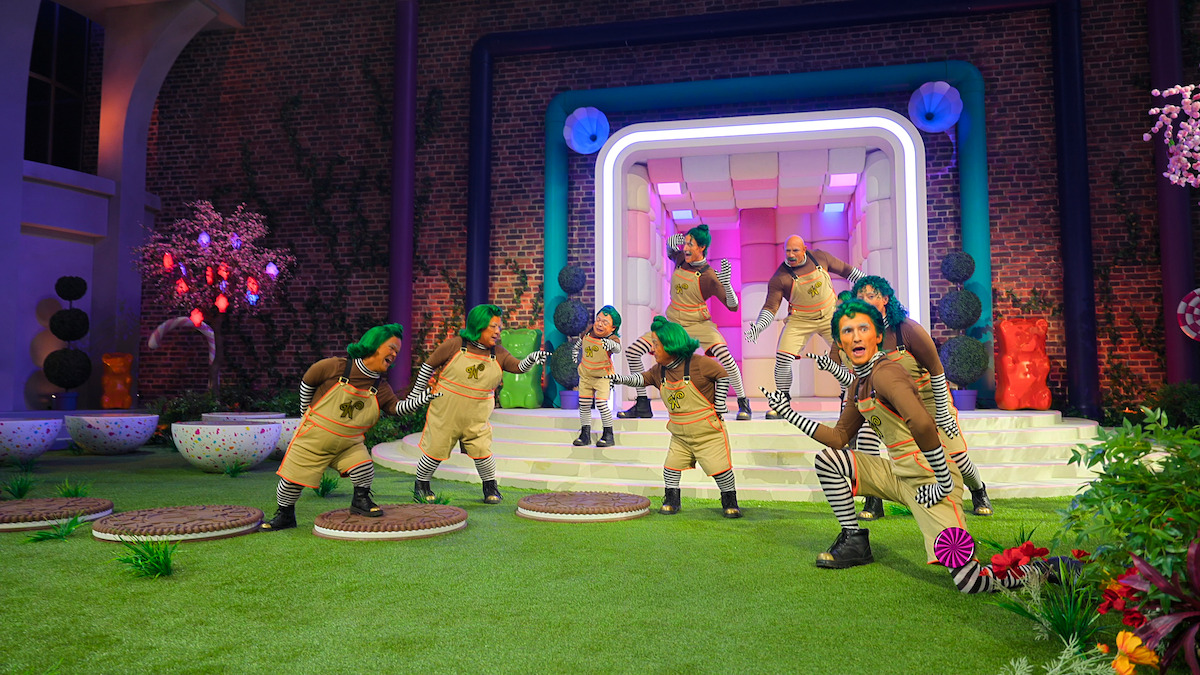
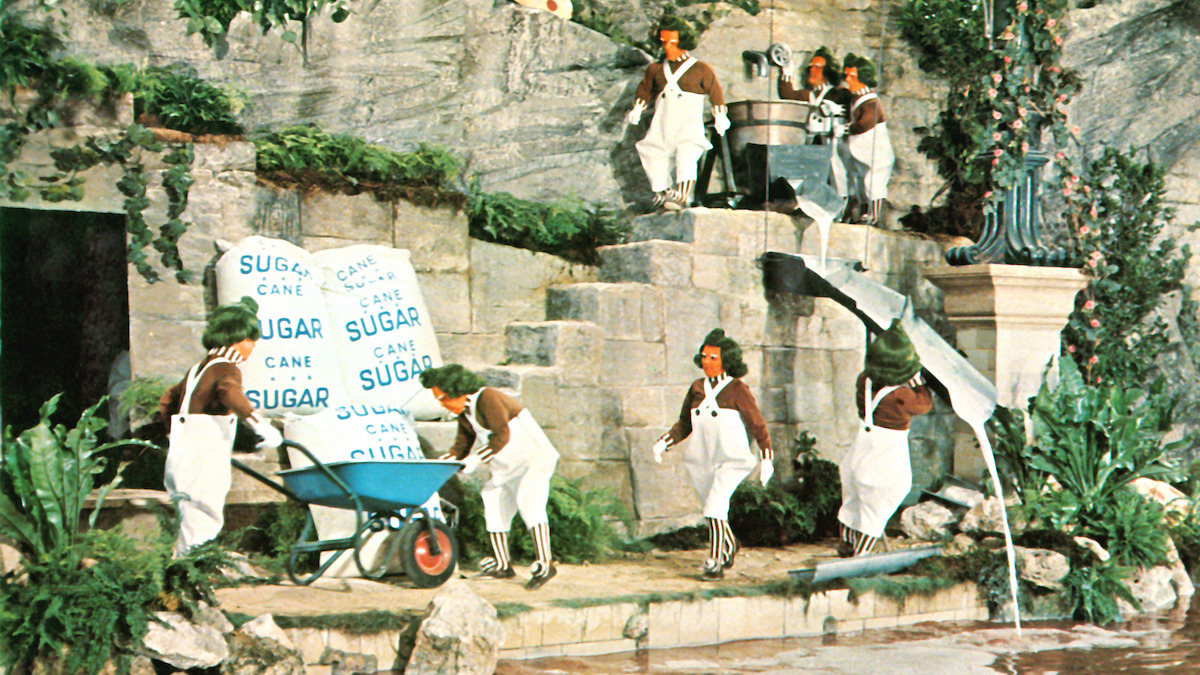
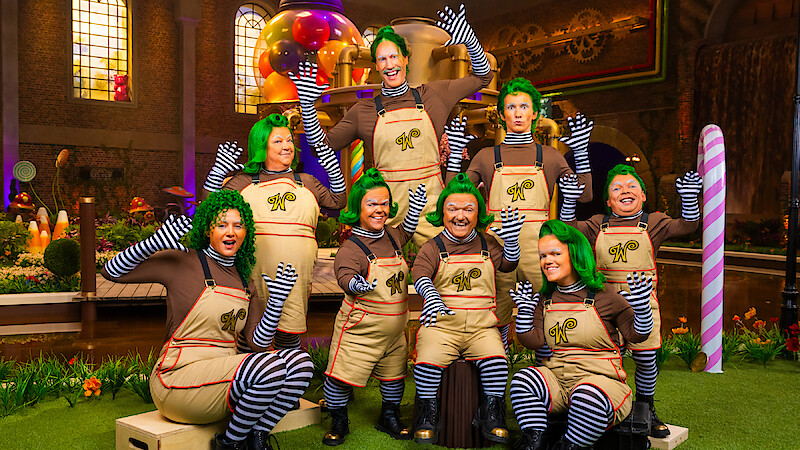
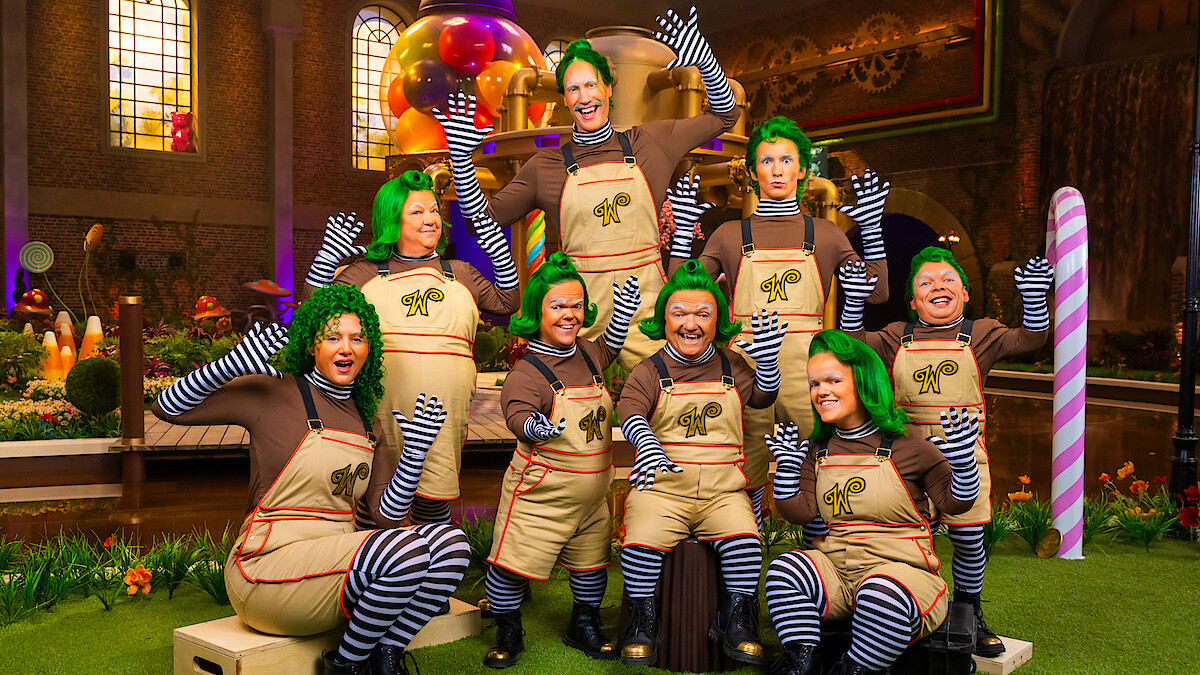
One of the key carryovers from book and film to series is Wonka’s tireless, colorfully coiffed workforce who help shepherd the players between challenges and serenade them with fun and snarky admonitions about game play. (Yes, the jaunty melody of the Oompa-Loompa songs remains intact in 2026.) While they were all played by little people in the film, the series’ version features Oompa-Loompas of all shapes and heights — including a living link to the 1971 film.
“To be back here making Wonka’s The Golden Ticket with my son Ben is absolutely mind blowing,” says Rusty Goffe, who is reprising his role as a member of the Wonka workforce. “When this came up, I thought, ‘Why not? Let’s get him in it as well.’” Ben was overjoyed to play alongside his father. “To share this experience with my dad, it’s truly special,” he says. “We had a brilliant time.”
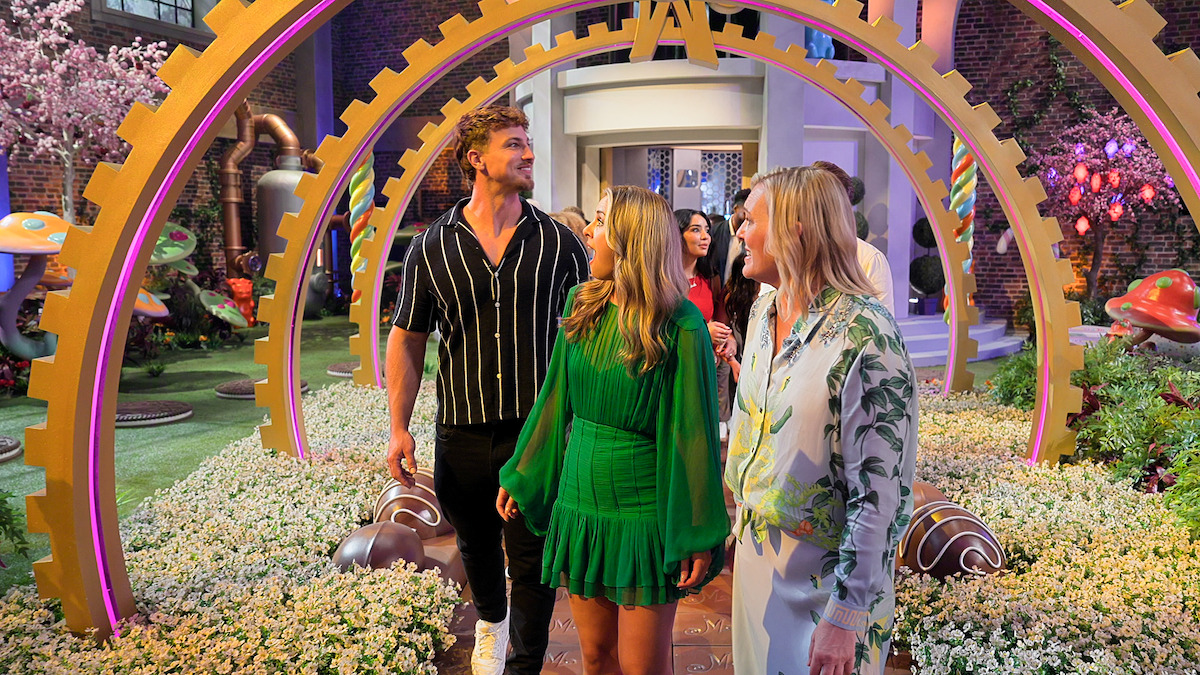
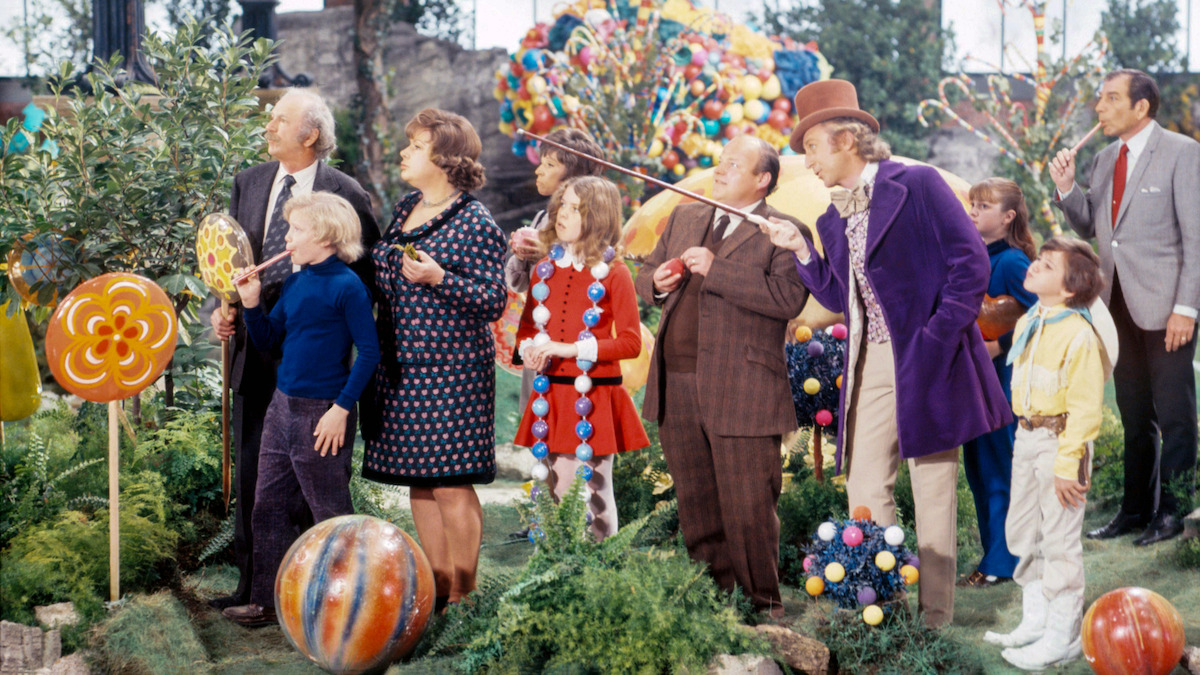
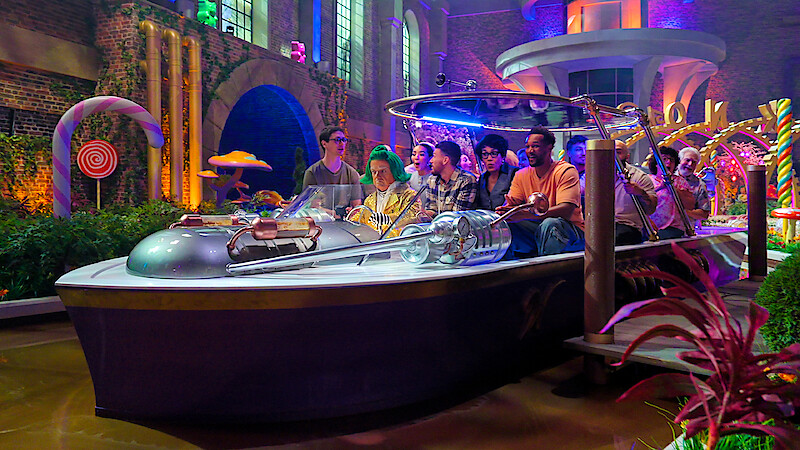
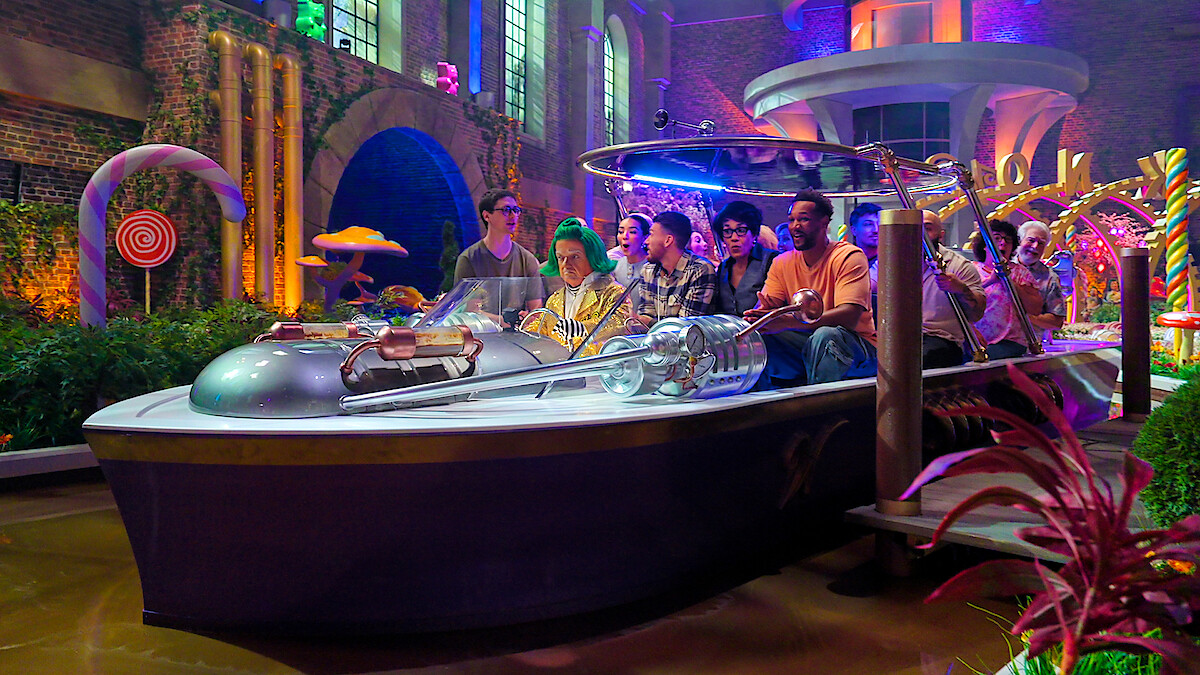
An early stop on the tour in the book and the film is recreated in a 40,000-square-foot space with all kinds of edible set pieces, including the chocolate river where Augustus Gloop met his fate. Unlike the one in the 1971 film however, the river — dubbed “27,000 gallons of chocolate goop” by showrunner Alison Holloway — was not drinkable. Almost everything else was ready to snack on, from flowers and mushrooms to the very grass the contestants walked on.
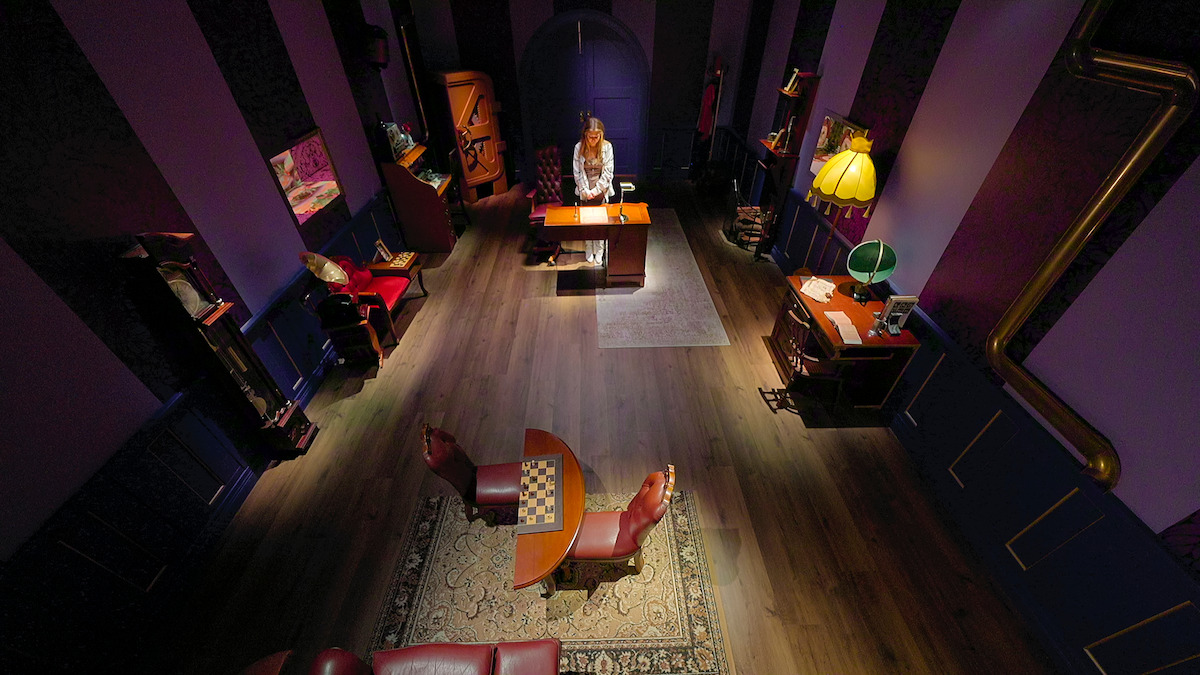
At the end of the 1971 film, Charlie and Grandpa Joe discover their happy fate in Wonka’s office, where all the furniture and artwork is cut in half. In the series, it’s repurposed as a room of reckoning for the players on multiple occasions. To create the room, Batson and his team sourced items like tables and a grandfather clock and then actually cut them in half. “Getting things with four legs to stand with two was challenging, but fun,” says supervising art director Jason Sherrow.
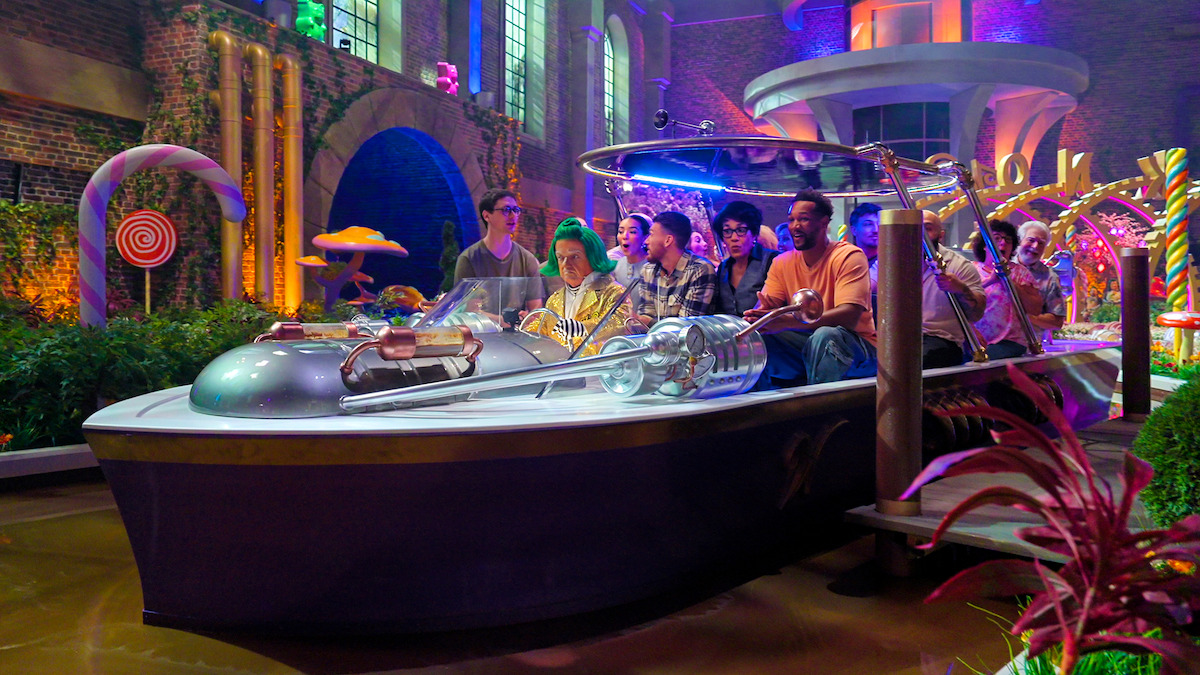
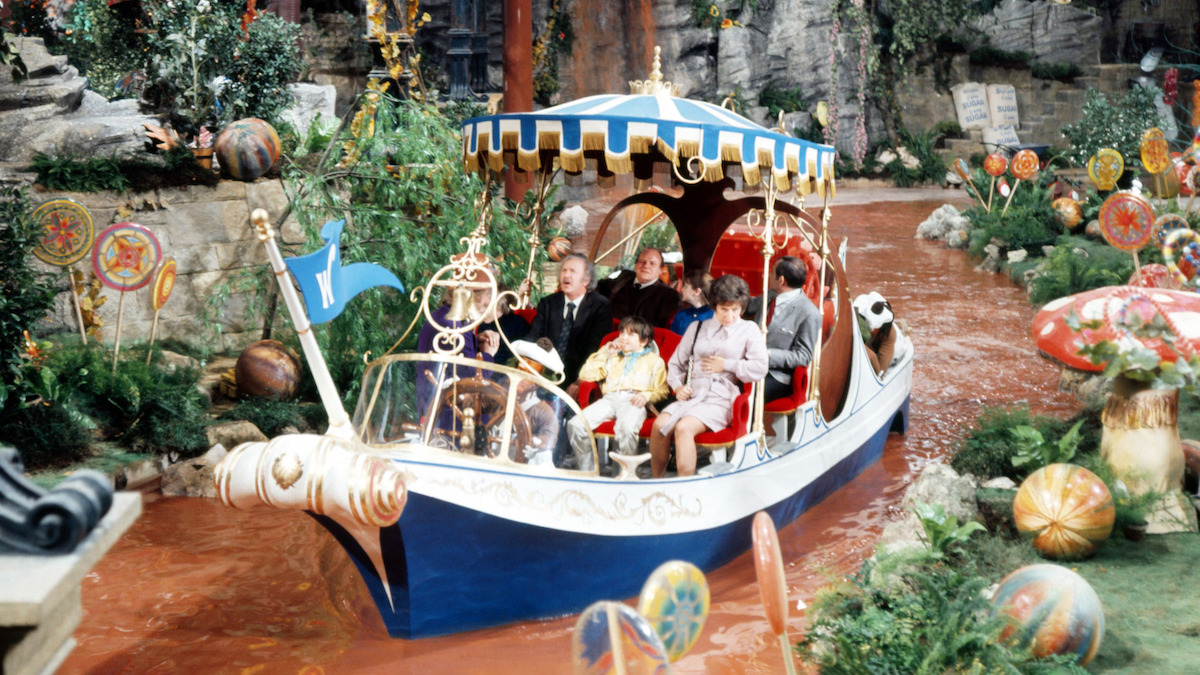
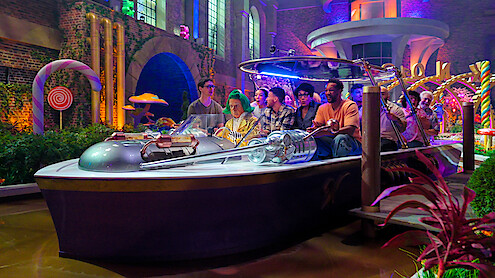
“Everything we made is bespoke” says Sherrow. “You can’t get anything here off the shelf.” That includes the Wonkatania, the boat that once carried Wonka’s guests through that infamous, nightmare-inducing tunnel. Now, it returns tunnel-free but no less demanding: piloting it down the thick chocolate river takes serious momentum, and the vessel requires precisely four meters to stop. Goffe, who is familiar with the original, says he was blown away by the attention to detail: “It’s a fabulous boat.”
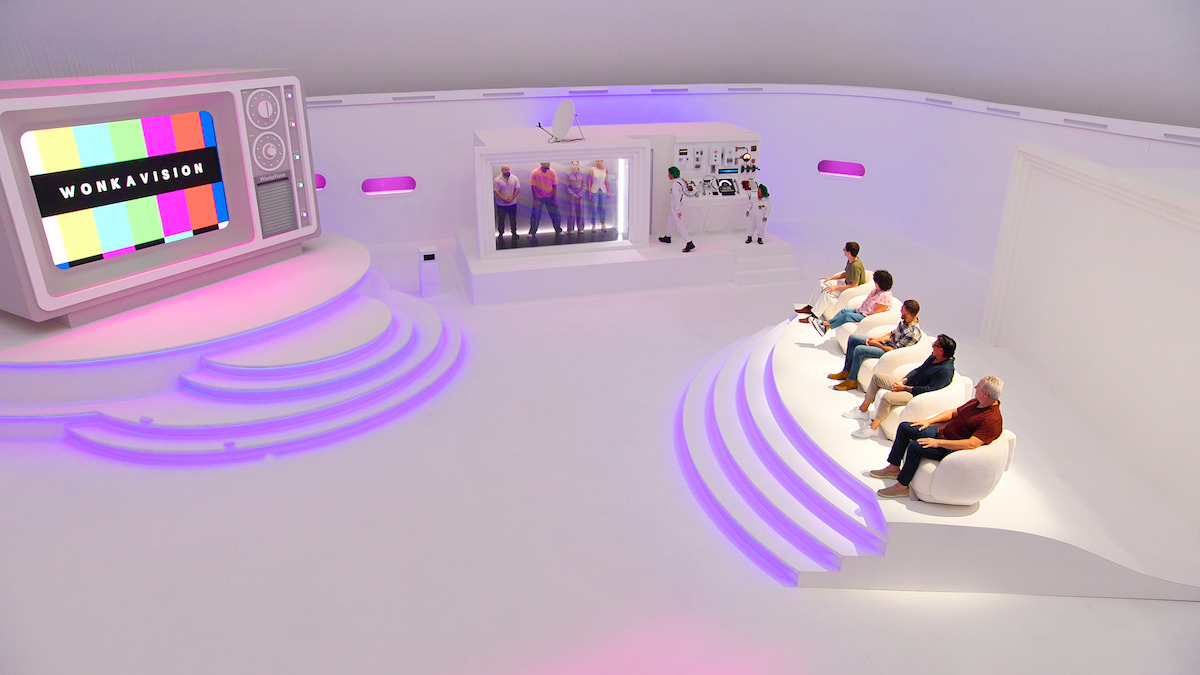
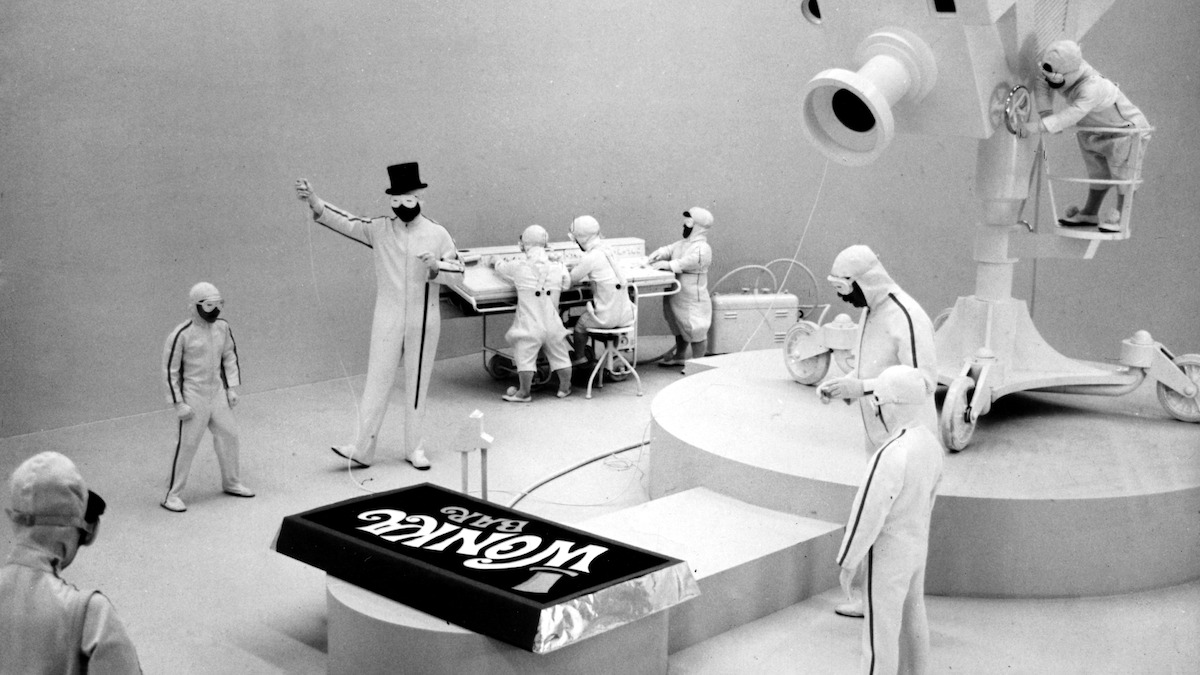
Wonkavision was the pristine broadcast studio where Mike Teavee got a lesson in being too addicted to the tube. Appearing on the series as Wonkavision 2.0, it’s where competitors go to play various game show challenges. The updated version featured game shows hosted by a trio — appearing via hologram — who know a little something about gamesmanship: Howie Mandel (Deal or No Deal, America’s Got Talent), Nick Cannon (The Masked Singer, America’s Got Talent), and Wayne Brady (Let’s Make a Deal, Don’t Forget the Lyrics!).
In each episode, the contestants are presented with challenges that test everything from physical strength to mental acuity to strategic planning — and are inspired by the 1971 film.
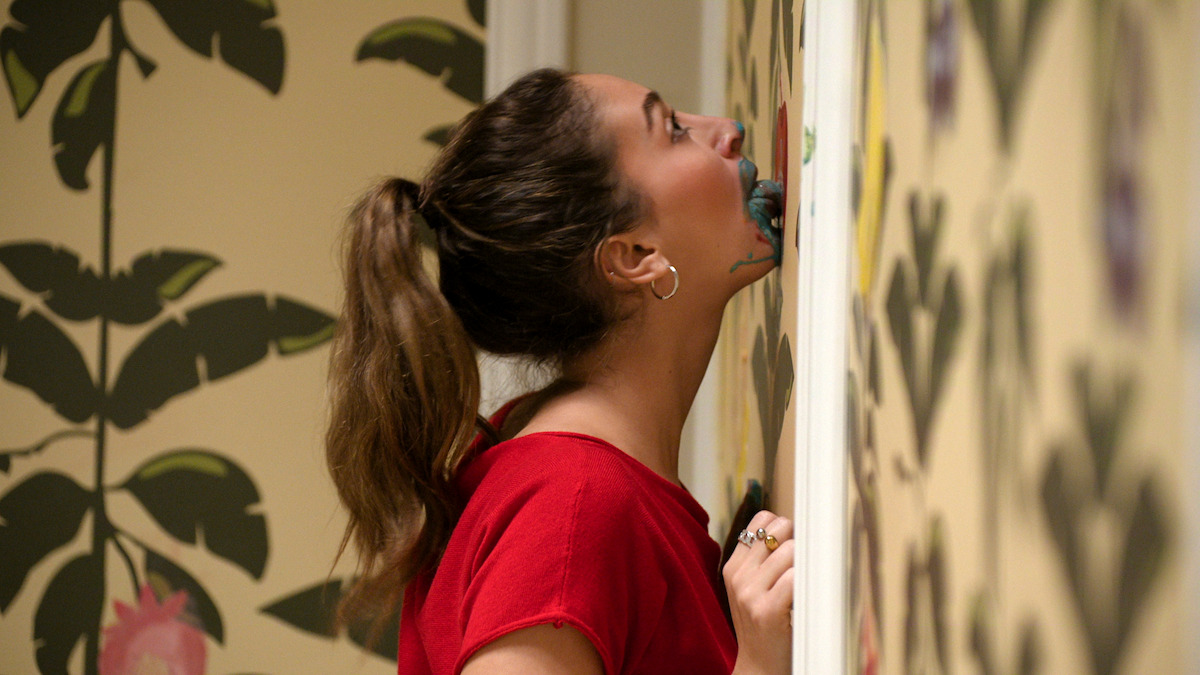
Nearly every signature prop from the film was transformed for the competition series to keep the guests on their toes. The lickable wallpaper that once tempted Wonka’s tour group with every fruity flavor imaginable now doubles as a finish line in a challenge, sending contestants into a genuinely lip-smacking sprint to the finish.
The hand-shaped coat racks that used to startle visitors by reaching out and grabbing their hats and coats have been reimagined as the centerpiece of another early challenge (still just as eager to grab something). Wonka’s most closely guarded invention, the Everlasting Gobstopper, gets supersized for a stacking challenge. And Veruca Salt’s beloved, fatal obsession, the golden egg, is back too, still ending tours, this time by elimination instead of a trapdoor.