Greetings, nerd! You’ve unlocked the curiosity door.
As any fan will remember, HNL, located in Indiana, was a government research facility operated by the US Department of Energy. As part of the MKUltra program, the lab conducted experiments that resulted in the birth of children with psychokinetic abilities. These new test subjects were soon placed under the supervision of Director of Operations Dr. Martin Brenner.
In November 1983, subject “Eleven” opened a gate into an alternate dimension, setting off a series of laboratory breaches. In the years that followed, several incidents occurred between local residents and law enforcement who came into contact with creatures from the other dimension.
Now it's time to unseal these secret documents from the HNL archives and shed more light on the world of
Stranger Things.
Underneath the Demogorgon Suit
The team behind Season 1’s practical Demogorgon monster included makeup artist Mike Elizalde, FX artist Mark Viniello, mechanical designer Mark Setrakian, and actor Mark Steger. The process involved creating a live cast of Steger’s body and fitting him with stilts that lifted him a few inches off the ground, to mimic the creature’s imposing height. “The challenging part is his arms,” said Viniello. “The performer’s arms were actually outside the costume, and they were digitally removed later. We had to work out how he was going to hold the arms, how he was going to control them, and what mechanism to make the arms flex and move.” The team found a solution with arms held by an external handle and hands controlled via radio by off-camera puppeteers.
The Demogorgon’s teeth were a challenge for the team working on the practical suit, as Steger’s face was positioned directly within the monster’s mouth. “The mechanism that makes the mouth open and close is right in front of Mark Steger’s face,” said Elizalde. Added Viniello: “When the petals get closed with Mark Steger’s face in there, we didn’t want to take an eye out, so they had to be soft but look scary and terrifying.”
During the show’s earliest conceptual stages, Eleven (Millie Bobby Brown) was an entirely different character. "We always had this character who would escape from a secret laboratory, had psionic abilities, and could kill people with their minds,” said co-creator Matt Duffer. "But the character was more like Number One, in the sense that it was a 30-year-old male.” The character quickly evolved. "A day later, we toyed around with the idea, ‘What if it was a young girl? Someone the boys could really interact with?’ It allowed us to have an E.T. vibe.” Co-creator Ross Duffer adds, “She’s an outsider, very much like they’re outsiders. Once we had that idea, the character of Eleven just sort of clicked for us.”
The Resurrection of Will Byers
Season 2 featured some of the most intense moments for Will Byers (Noah Schnapp) after he returned from the Upside Down. Other than dealing with school bullies who dubbed him the “Zombie Boy,” Will also had to contend with the remnants of the Mind Flayer trapped within him. Schnapp recounted a powerful moment during a haunting scene with Winona Ryder, where Will reveals to Joyce how he felt after being possessed by the otherworldly entity. “I’m crying in her arms,” said Schnapp. “I was so nervous for the scene. Winona was like, ‘Don’t worry. We’ll sit in my trailer, and we’ll work on this together. I’ll walk you through it. I was a child actor.’ It made the job so easy.”
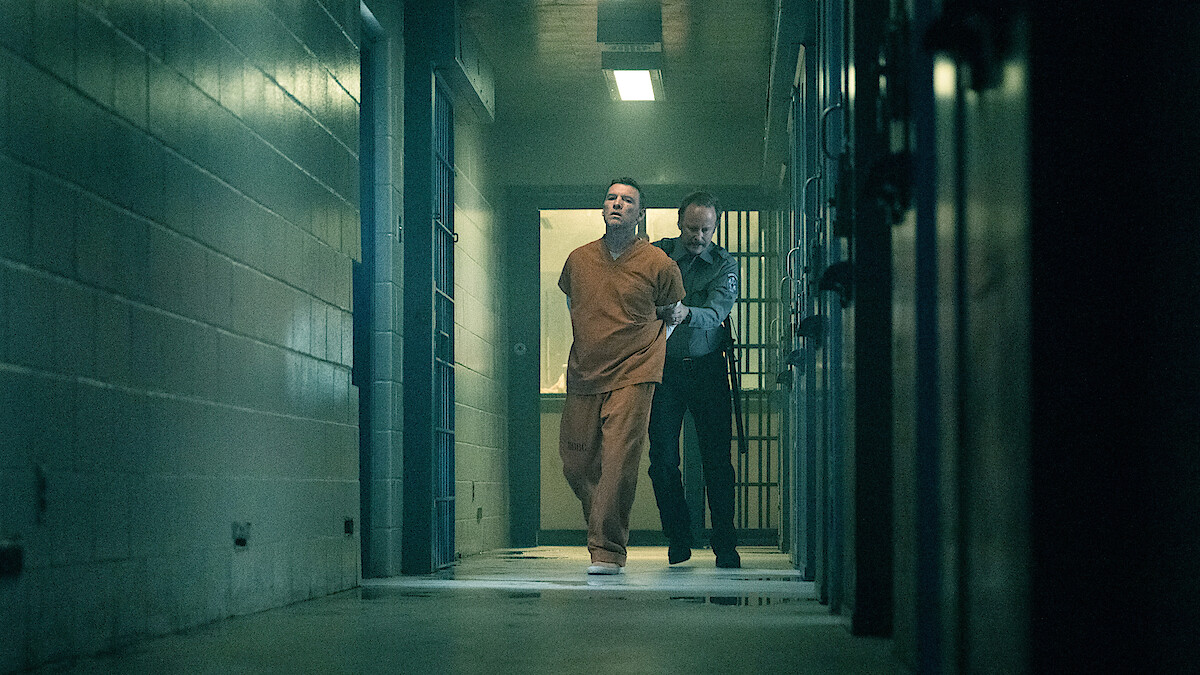
Even though the Soviets had to flee from Hawkins in Season 3, they continued their experiments back in the motherland, some of which Hopper (David Harbour) discovered during his prison stint in Kamchatka. The show’s production team developed these documents to build out the story of the experiments. Translating their Demogorgon autopsy report, we discover the creature had “at least four rows of teeth” and a “heart cluster” with “four separate organs in one digestive organ.” Another file warns: “Failure to handle the beast with the utmost and extreme caution will result in your immediate demise. . . . The beast is bloodthirsty and ruthless, and its appetite seems to know no end."
The Autopsy of Chrissy Cunningham
Season 4 was the darkest yet, with the introduction of the sadistic and powerful Vecna. Concept artist Michael Maher Jr. recounted how the scenes of Vecna’s claiming his victims were shot with a combination of practical and CG (computer graphics) effects. "For Chrissy, Fred, and Patrick, we shot a lot of stuff practically. Chrissy, for example, was flung up onto the ceiling, and we had her up on a rig,” said Maher. "When we shot her face, it became fully CG — the broken bones, the jaw being manipulated, and her eyes sunken in. Doing human faces in CG was very complex.”
In Season 4, Max’s (Sadie Sink) grief over Billy’s (Dacre Montgomery) death made her a natural target for Vecna who preferred to prey on victims with existing trauma. The villain tapped into her memories of the Snow Ball, corrupting the school dance into a bloody nightmare. “The prep for season 4 kind of came naturally,” said actor Sink. “It was a weird time coming out of COVID, and I was living on my own for the first time. That loneliness helped me build a foundation for where Max was at in this current point of her life. Combined with some journaling here and there, it was very easy to tap into that mindset for her.”
In order to up the stakes in Season 5, the Duffers introduced a new enemy for Eleven. It wasn’t a monster from the Upside Down, but Dr. Kay’s (Linda Hamilton) sonic weapon that emitted a special frequency only Eleven and Kali (Linnea Berthelsen) were able to hear. “In order to make things more dangerous and scary, we realized we basically needed our own version of kryptonite,” said Matt Duffer. “In terms of the design, we wanted it to feel grounded and real, like something that could have been built in the ’80s, something you might have seen in A New Hope.”
The Rainbow Room in Hawkins National Lab was the point of origin for Eleven and Vecna. This crucial location was also production designer Chris Trujillo’s favorite set. “At first glance, the Rainbow Room feels like a space designed with children in mind. It’s got the rainbow accents and carpeted furniture,” said Trujillo. “But if you give it scrutiny, you see how cold and hard the surfaces are. The coffered fluorescent-lit ceiling was essential to creating this oppressive, evenly lit, stressful environment. It’s small, but it presents as a labyrinth. You could get lost in this repeating tile pattern that feels cheerless.” The set decoration also reflected this monotonous atmosphere with dreary maze-like puzzles used to evaluate the test subjects.
Hawkins National Laboratory
The set location for Hawkins National Laboratory was once a mental health treatment facility on the campus of Emory University, simply known as “Building A.” The brutalist building was constructed in the 1960s and featured two intersecting blocks that formed a cross. The rigid geometry and concrete material lent itself to the clinical and imposing atmosphere of a secret government laboratory. “We completely revamped the lab interior,” said Trujillo. “It was all about sucking all the color out of that world and having it be this very austere, industrial color — tans, whites, and grays that emphasized the institutional coldness.”
What is the science behind the show’s interdimensional gates? Eagle-eyed viewers may have caught a glimpse of the answer from a page in Dr. Brenner’s (Matthew Modine) journal. The show's crew went to great lengths to create props like this one that would give real depth to this world. Here, the lab director conjectures about the physics behind the Upside Down: “Electromagnetic fields interact with the fabric of space-time. EM fields might contribute by providing the necessary negative energy density or tension. This could create a repulsive gravitational effect stabilizing it.”