How real is ‘Vikings: Valhalla’? Creator Jeb Stuart tells all - Netflix Tudum
Interview
‘Vikings: Valhalla’ Creator Jeb Stuart Reveals the Nordic Raiders’ Real History
First of all, they didn’t call themselves Vikings.
By Channing Sargent
Feb. 27, 2022
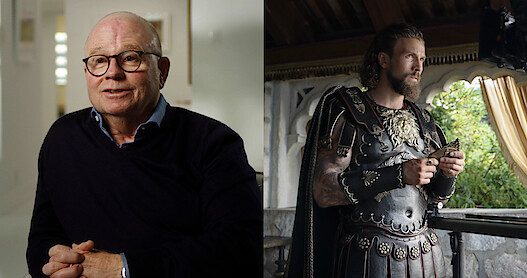
Calling all Viking history buffs — and the very patient partners, parents and pets who love them. Have you binged every Viking-related television series and scoured the ends of every related Wiki and Reddit thread? Have you gone to arms in the comment threads over historical accuracy and set-dress minutiae? Couch-bound historians of the world, we see you; we caught up with Jeb Stuart, creator and showrunner of the new Netflix seriesVikings: Valhalla — fun fact: he also wrote Die Hard! — to dive deep into the historical fiction of the show.
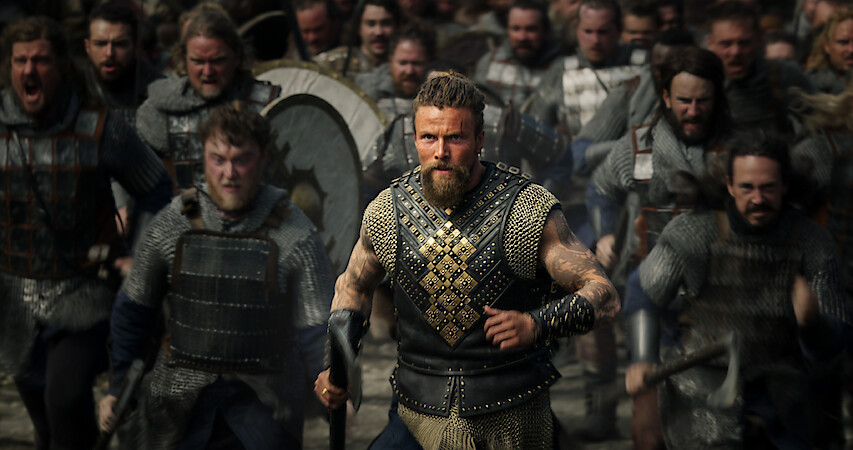
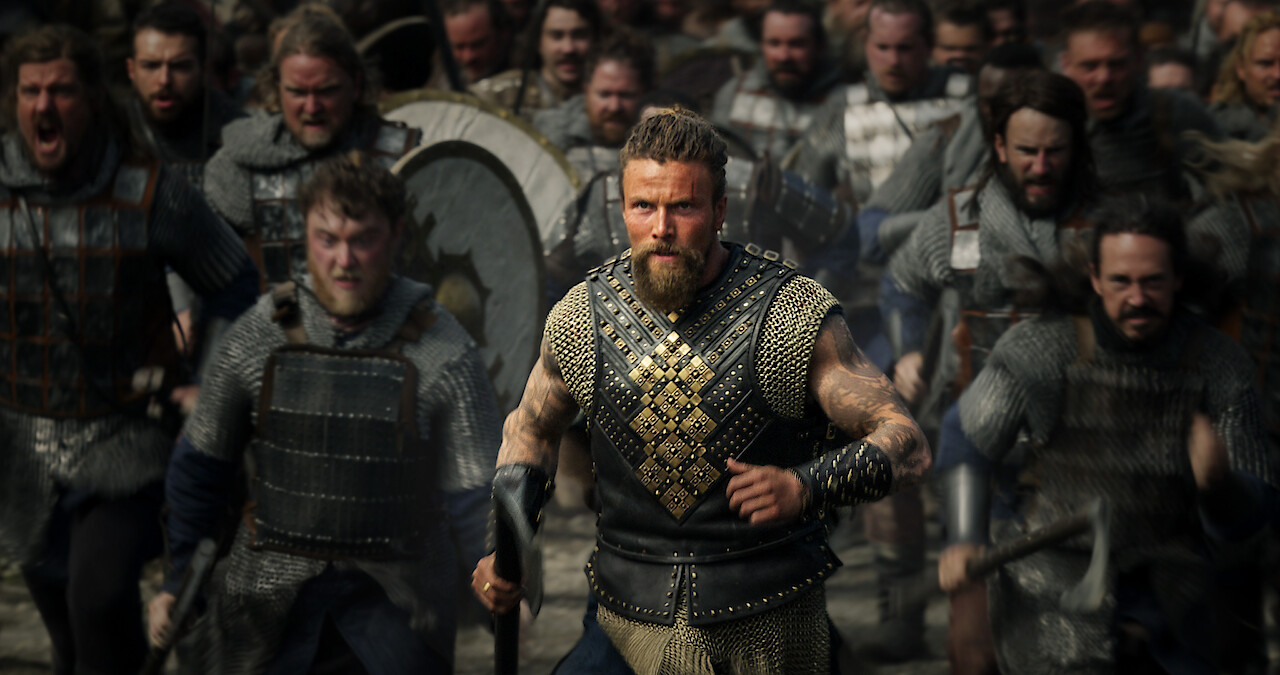
Set 100 years after The History Channel’s Vikings series (helmed by Michael Hirst), the first season of Vikings: Valhalla explores the beginning of the end of the Viking era.
The old ways died hard in Scandinavia.
Stuart tells Tudum about what people today get right — and wrong — about their perception of the Vikings, his inspiration for the overarching themes of the show, and what excites him about writing and creating historical material. And beware, some light spoilers abound…
A New Era Featurette | Vikings: Valhalla
Why do you think we’re so fascinated by the Vikings? We just can’t get enough.
The thing that fascinates me, and why I can’t get enough, is: It’s a great mirror on our society. It allowed for a poor farmer like Ragnar Lothbrok to suddenly become a king, to become rich, to experience the world. It allowed somebody like Harald Sigurdsson the opportunity to travel all the way around the globe or Leif Eriksson to explore to the West. What’s the DNA in these people that created this bravery? I think that today, vicariously, we enjoy that.
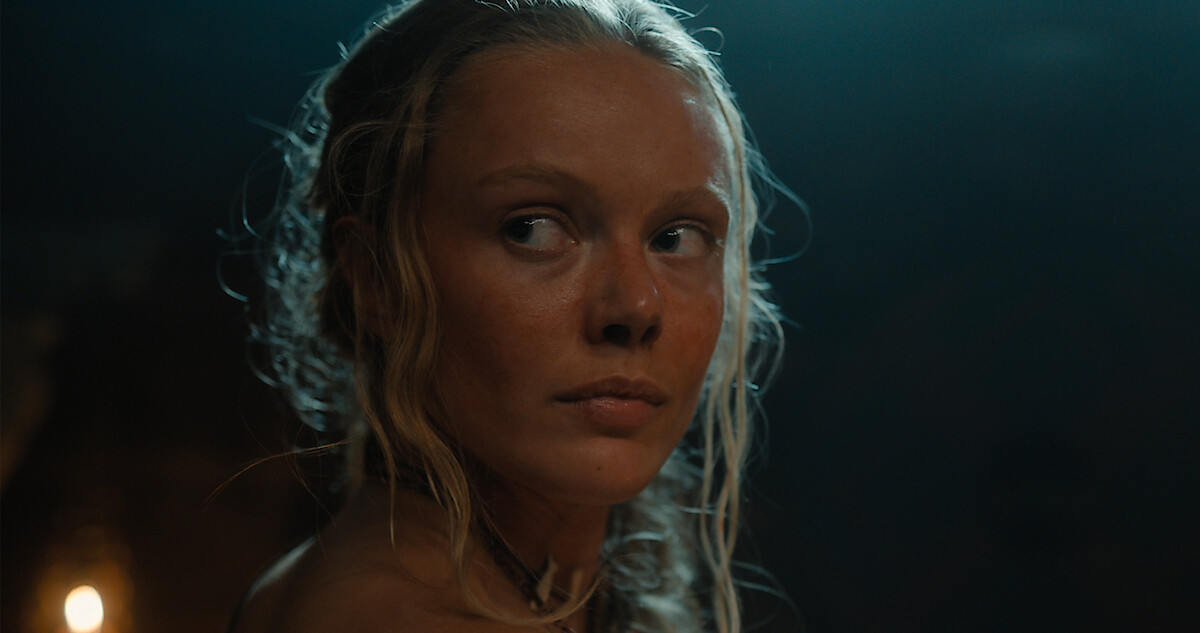
From a writer’s standpoint, I love being able to write strong women without making them up, without saying, “Oh, I’m going to bend history to make this work.” The tales of the Viking people were filled with strong women.
And yes, it was a tough time, but we live in tough times. Sadly enough, I don’t have to go too far to find relevance in my story, with what’s going on today. But at the same time, I find the Vikings can be very aspirational. In the kind of writing that I do, whether in Die Hard or The Fugitive, I try to write character-driven action. It’s exciting stuff for me, because I can see my characters doing those things. A lot of times when I’m working with our writers, I say, “that’s not our show.” Hurling an axe 800 yards and killing somebody isn’t our show, because that couldn’t have happened. But I do think that plotting a way to get into the great hall and kill your attacker when it’s filled with people who could stop you, any one of them, takes strategy. And it takes a smart woman like Freydís and a smart man like Leif. Those are characters I love writing for.
Were there women warriors and rulers? And how did the Valkyries of Norse mythology set a precedent for powerful women?
Yes, absolutely [there were women warriors]. That the Valkyries were these mythic female warriors tells me that they were valued. They weren’t just messengers to take the fallen to Valhalla, to Odin’s table. They had to have great skills themselves. There were those who chose among the fallen to go to Valhalla. I think that they were based upon role models of real women.
What changed for you as you were working on the series in terms of how you view Vikings, and what do most people get wrong or right about the Vikings?
The biggest thing I may have gotten wrong, and I think that most people get wrong, is that the word Viking is actually not a noun, it’s a verb. It’s an act. It equates to pirating. We also have a tendency to think in terms of everybody in Scandinavia being a Viking. By the time of Valhalla, the Vikings were not a singularly homogeneous, group of blue-eyed white people. They were multicultural and multiracial. The Vikings went all over the globe. We know from DNA evidence that there’s Viking DNA all around what we considered the known world in the middle ages. We know that they were in Palestine and Constantinople. We know that they were all through Russia, North Africa, Spain, Ireland, not to mention Canada.
So the cool thing that I think most people don’t know about the Vikings is that they didn’t come in [to new worlds] to conquer and change people to their ways. They really absorbed what was great about the culture that they were in. Russia is a perfect example. When they came in and settled in that area, they absorbed a lot of what was in that culture. And they left behind a lot of culture. If you look at the early maps in Russia of the Dnieper River, the great cataracts of the lower Dnieper all had Norse names to them, centuries after people had forgotten that the Vikings had been there.
The fact that the Vikings did reach so far across the world they must have had incredible technologies and innovation for such journeys.
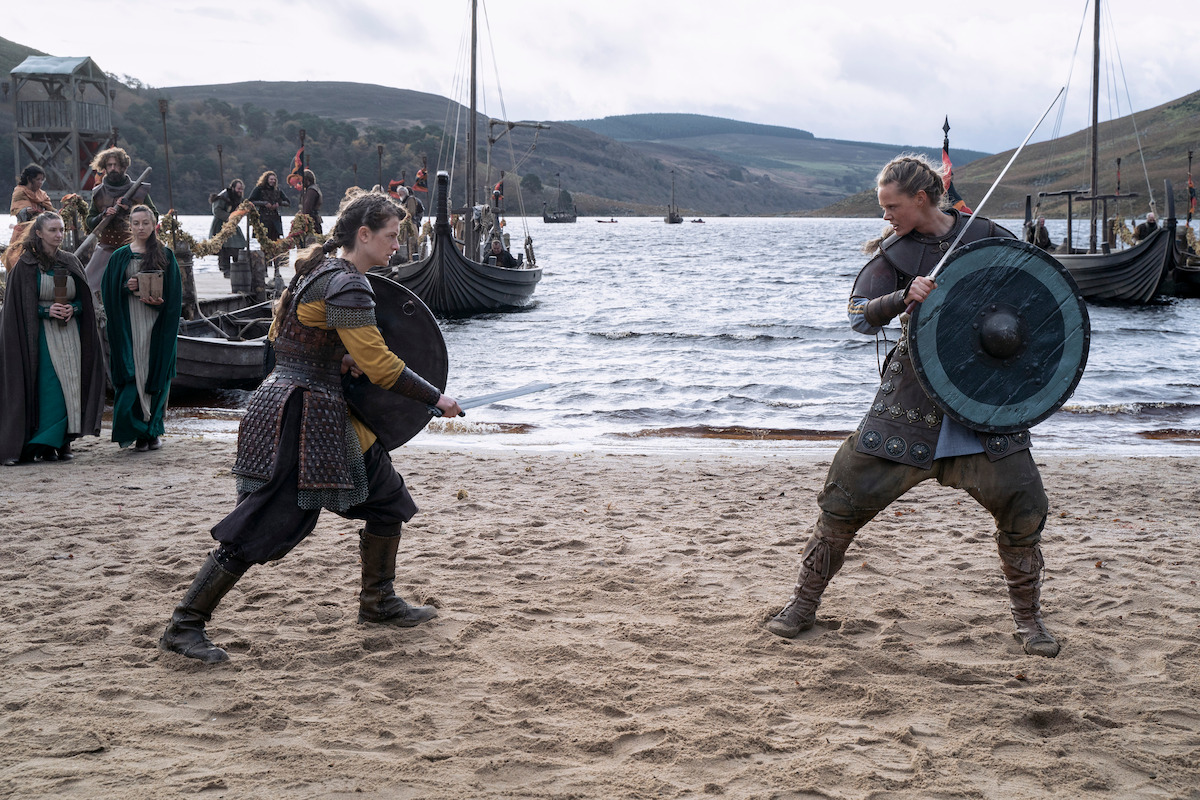
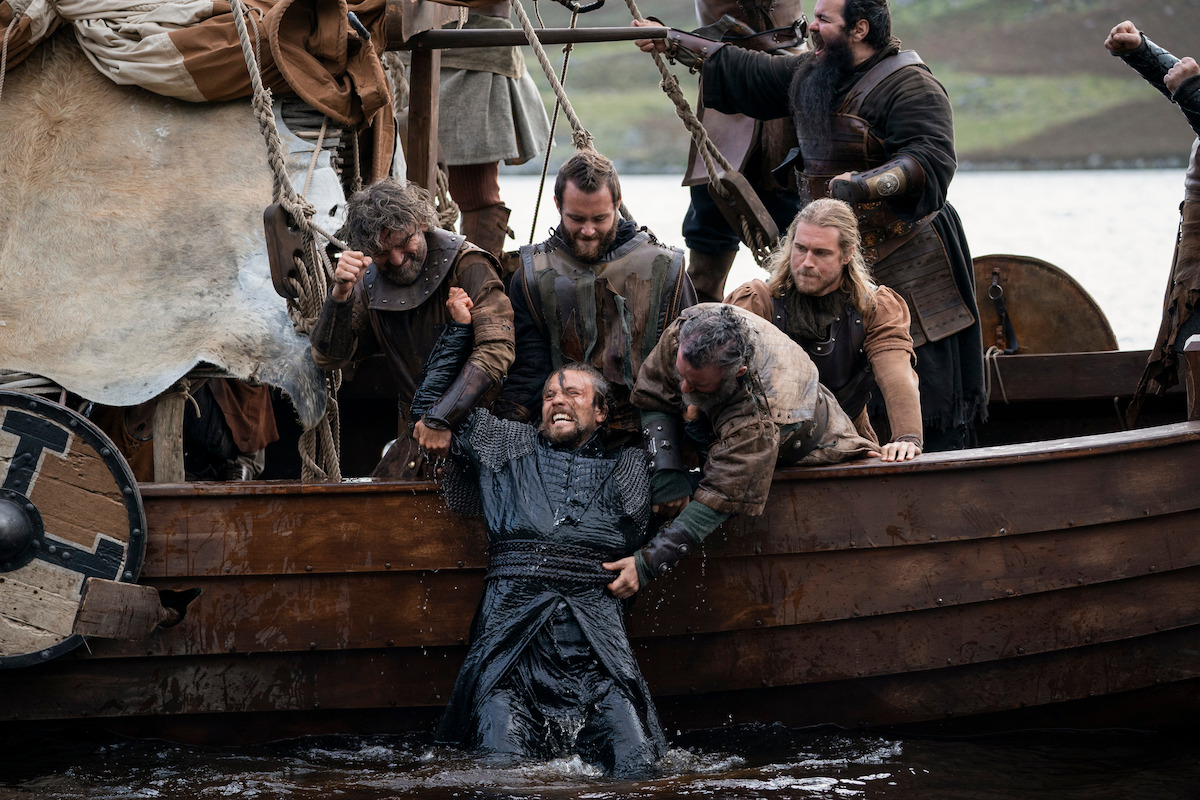
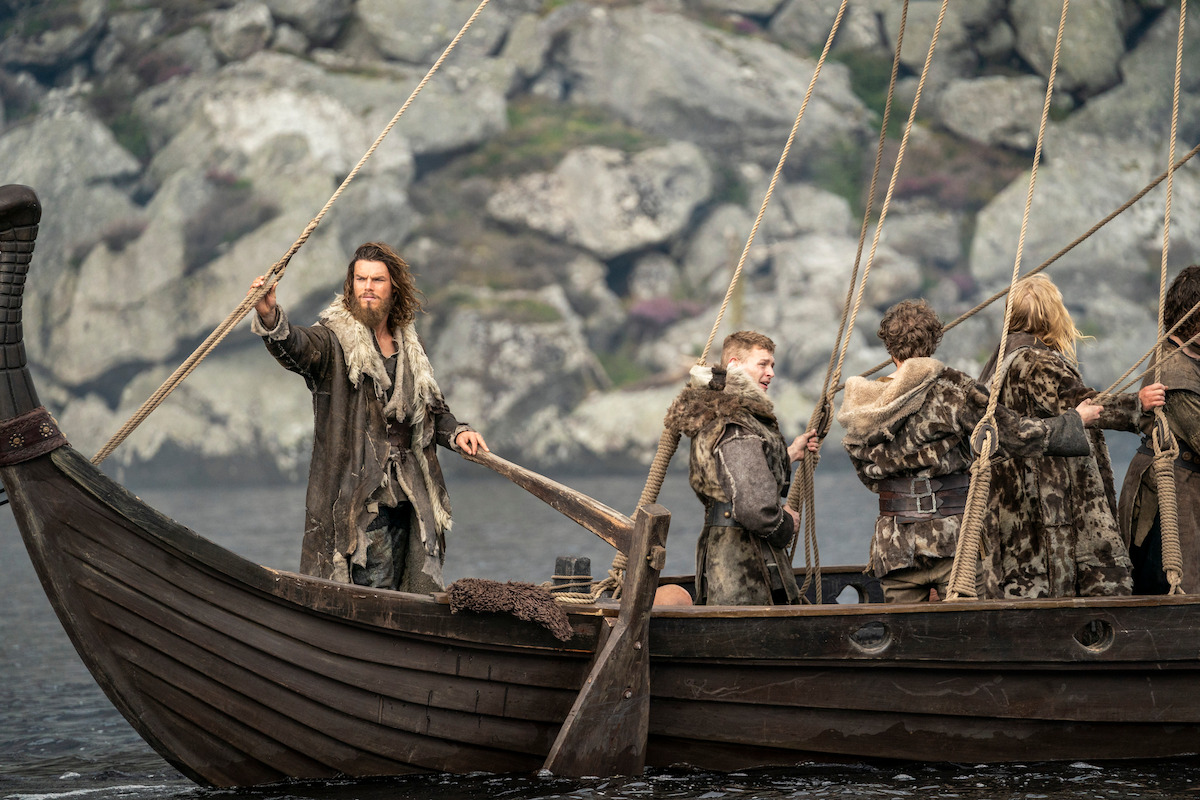
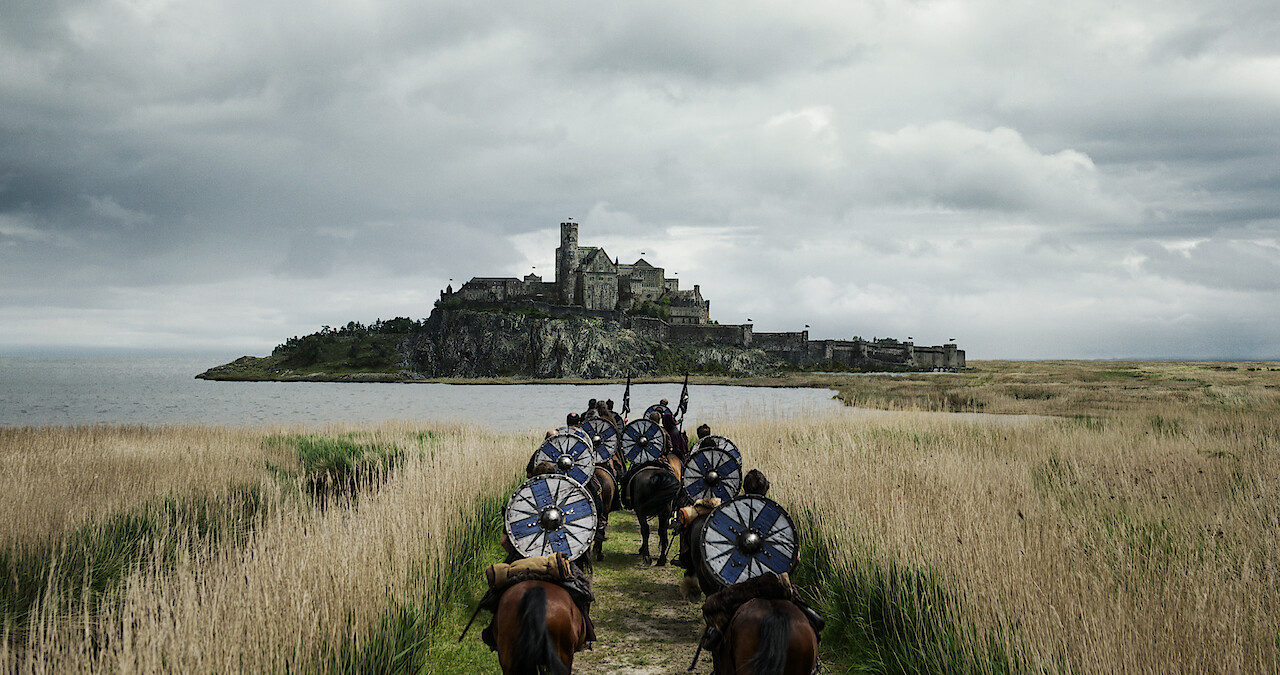
The boats that we use in production are very accurately made. We have a little armada of Viking boats that have been made in the clinker style, and they’re very accurately created. And one of the things that strikes you when you get in one of these boats on the Irish Sea, which we do from time to time, I’m telling you, it’s, like, “Really, they went across the ocean in these things?” There’s no below decks.
So it tells you that the No. 1thing that they had besides some really great technology was just sheer bravery.
Valhalla. What is it, and how did it become the central idea of this series?
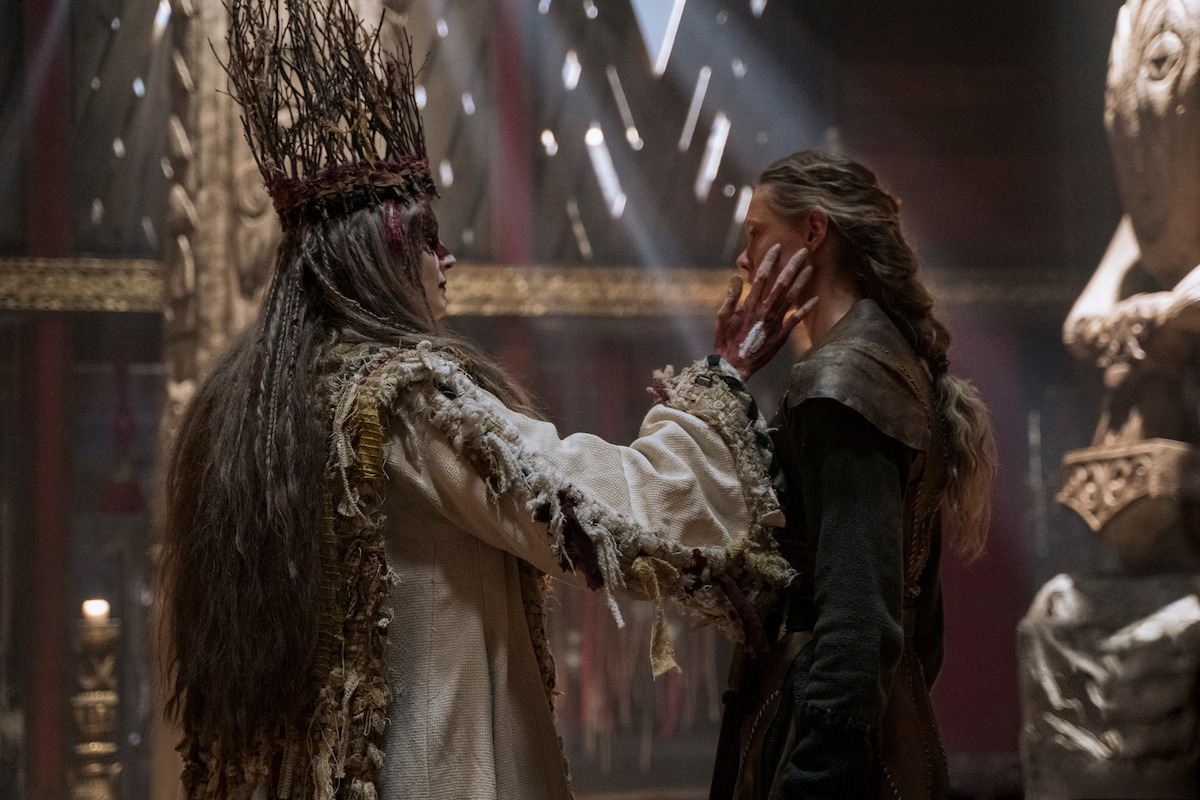
According to the Norse Sagas if you died honorably in battle, the Valkyries would carry you to Valhalla, where they would eat and drink with their friends and wait for Ragnarök to come around. Valhalla as a final resting place seemed like a fitting title for a show about the end of the Viking era..
Throughout the series, we see a mixture of weaponry, including swords, axes, spears, knives, bows and arrows and catapults. What research went into the making of these weapons?
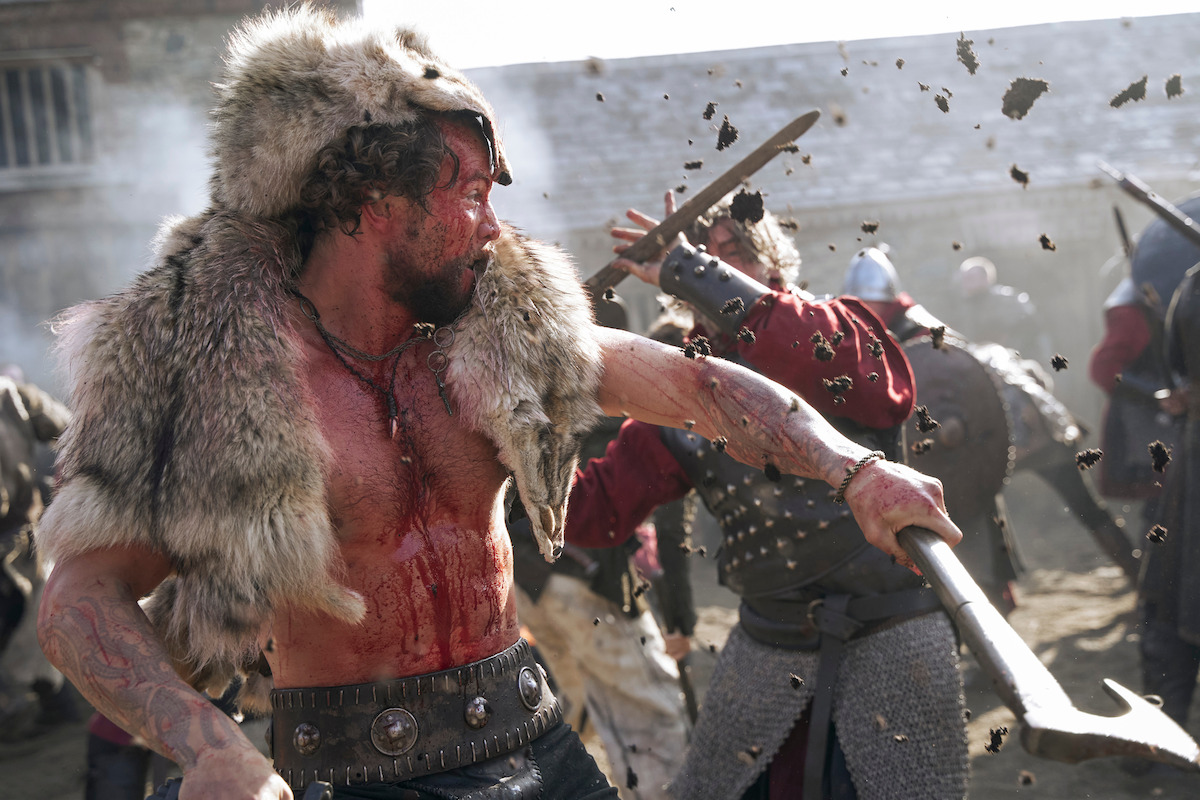
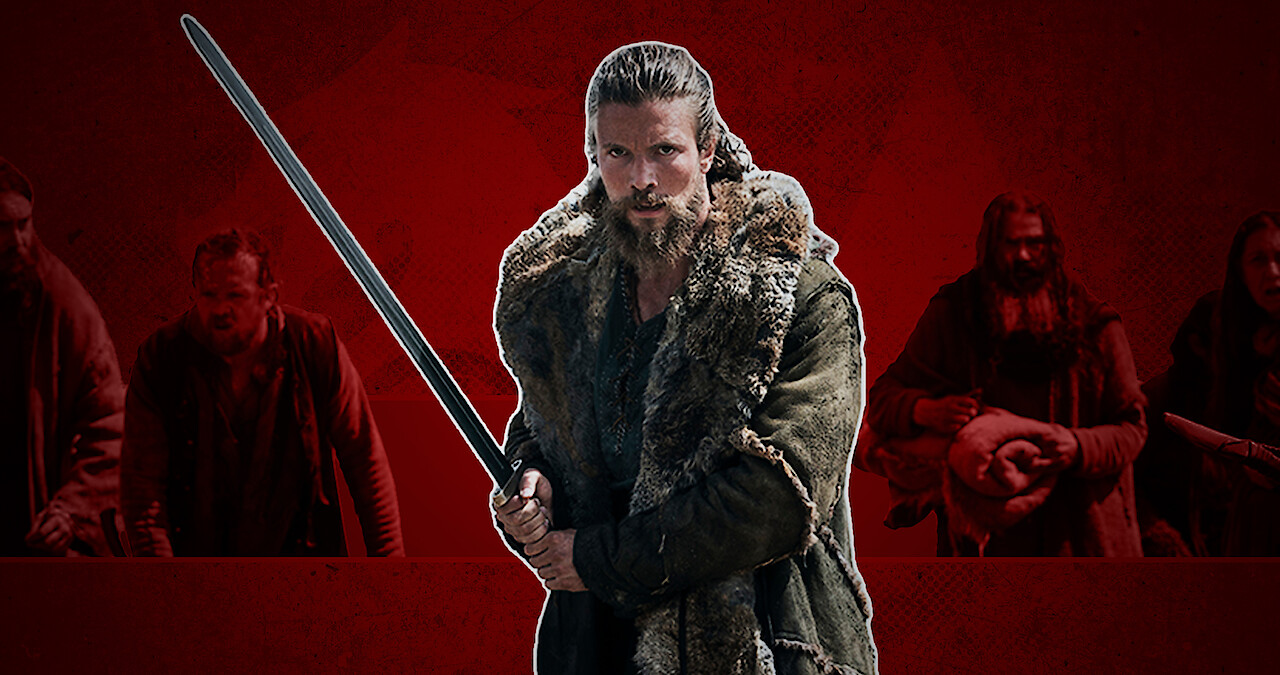
The weapons arepainfully accurate to the time. John McKenna, our armorer, is a phenomenal researcher. For example, if I go in to discuss Freydís’ sword (the Keeper of the Faith sword, which is her famous sword that she picks up in Season 1), we have to discuss the design, how the hilts are made, how the pommel is made, what the handles are made of, what’s the steel like. All of those details are just massively researched.
Just because I’ve got a good idea for something doesn’t mean we’re going to make it. We know from archeological evidence that certain swords at this time had a certain weight and had a certain shape... All of those swords are handmade by the armory. We have to decide, what do the Saxon swords look like? What do the Norman swords look like? As we get into the later seasons, what are the Byzantine swords going to look like? If you fight the Muslims, what do those swords look like? The curved shape existed in certain parts of the Caliphate and certain parts of the Muslim world or the Saracen world. But it didn’t exist in all parts of it.
So every detail is in the hands of John McKenna. Every year about this time, I get a shopping list from John: “I need 50 shields and 30 sorts of this and this and this.” And all of those things have to be approved. And then I have to write around the number of people that we’re fighting and working with. I love going down there [to the armory], but I make a point of not going unless I’ve got at least an hour, probably two. Because I’m not going to get out of there.
How do you think the idea of Valhalla resonates with modern audiences?
That was one of the most important parts for me. I immediately gravitated to this place in the 11th century. where we had this civil war, between Pagan Vikings and Christian Vikings, which I felt very relevant.
I mean, in today’s society, you have the right and the left, Republicans and Democrats. And we go through these periods in history, and not just in American history, where there suddenly lacks a middle ground. You can’t see somebody else’s point of view because you’re either one of us or you’re one of them.
Eleventh century Scandinavia was very much like that, and it had relevance to what we were going through in our own world, when I started working on this project in 2018, 2019. Not just in America, but internationally, we have these very conservative and liberal worlds that bang up against each other. In the year 1002, King Aethelred, the Anglo-Saxon king, launched a genocide against the Danes, or the Scandinavian people, who had established a domicile in England.
He did that because he felt that the Scandinavians, the Vikings in the north, were just fighting among themselves, and he thought they would never, ever, ever put aside their differences as Christian and pagan and come together again as Vikings to come after [the English]. Of course that was a big mistake, because they did. And of course, we see that lots of times in our own history. We see it in American history all the time, with the right and the left. Suddenly you are attacked from the outside, and you forget about your ideological differences; you become American and you head off to war. And that’s what the Vikings did at that particular time.
What were the differences between English and Viking militaries?
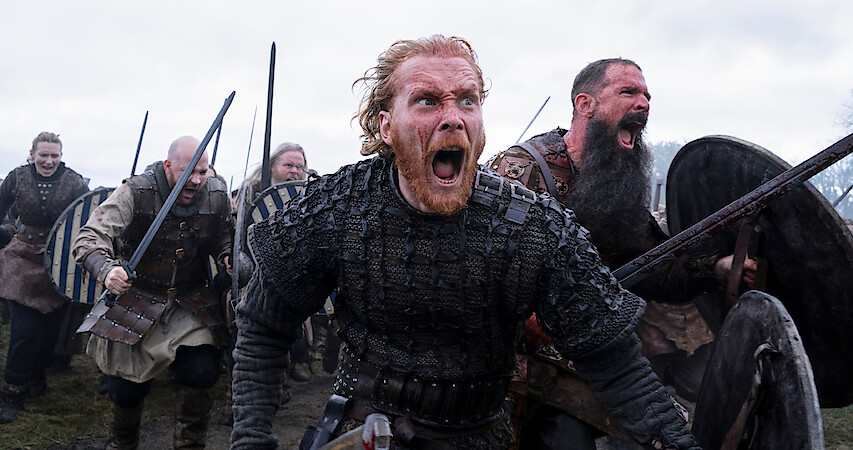
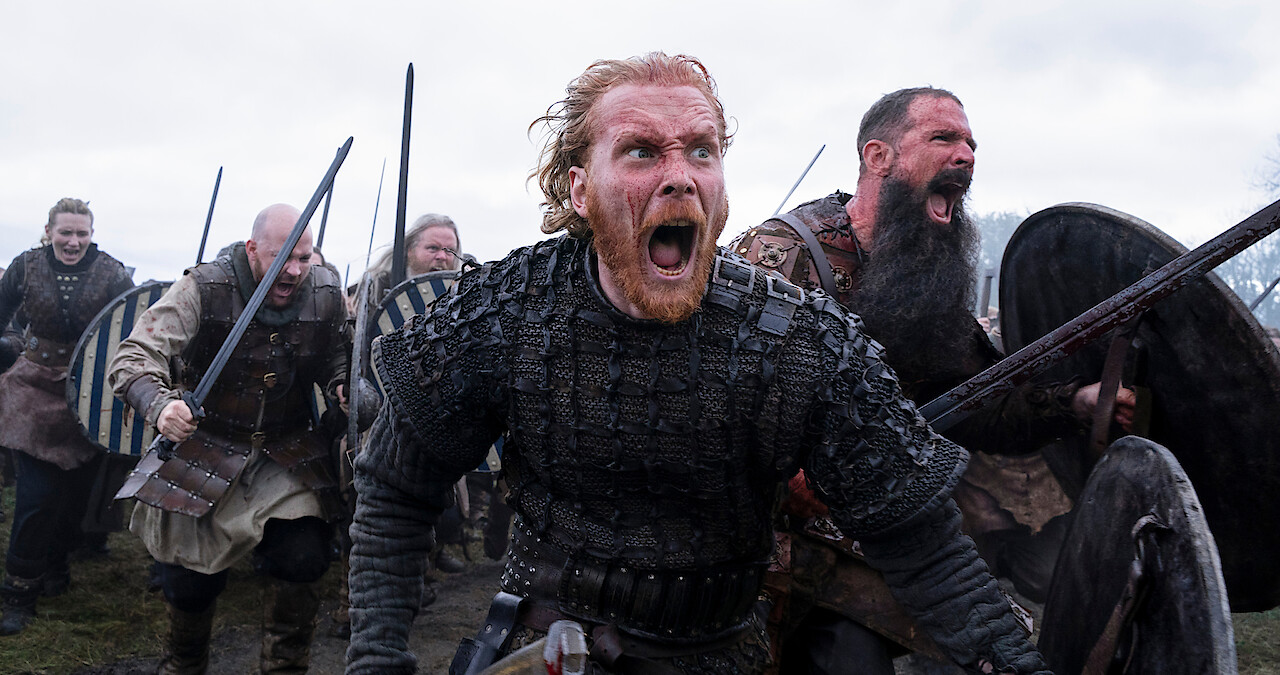
Strategy was a big part, obviously, but remember that by the time we get to the 11th century, a lot of our Vikings have been in the service of the English king. Olaf’s godfather was Aethelred, the king. Who your godfather was was very important in terms of your role and that sort of thing. So we do know that Olaf was quite familiar with the defenses of London and was available in London and that sort of thing. So the Vikings knew an awful lot. They’ve been fighting the Saxons for 200 years at this point, depending on where in the 11th century you want to drop down. They knew a lot of their strategy. They knew exactly what their weapons were like. They knew how they would fight. They knew what their cavalry looked like. And likewise, the Saxons were still terrified of these great armadas that the Vikings could bring down from the north. And they knew what the fighting spirit of the Vikings was. If you had to fight them, it was going to be rough simply because they were bigger and they were tougher.
But one of the things that’s a little bit different in my series is that I did not try to create two sides that are very different. They’re really battling right now for territory. The Vikings are battling for revenge and the Saxons are fighting for their Homeland. And those are two big motivations.
Were queens at the time truly given strategic commands of armies?
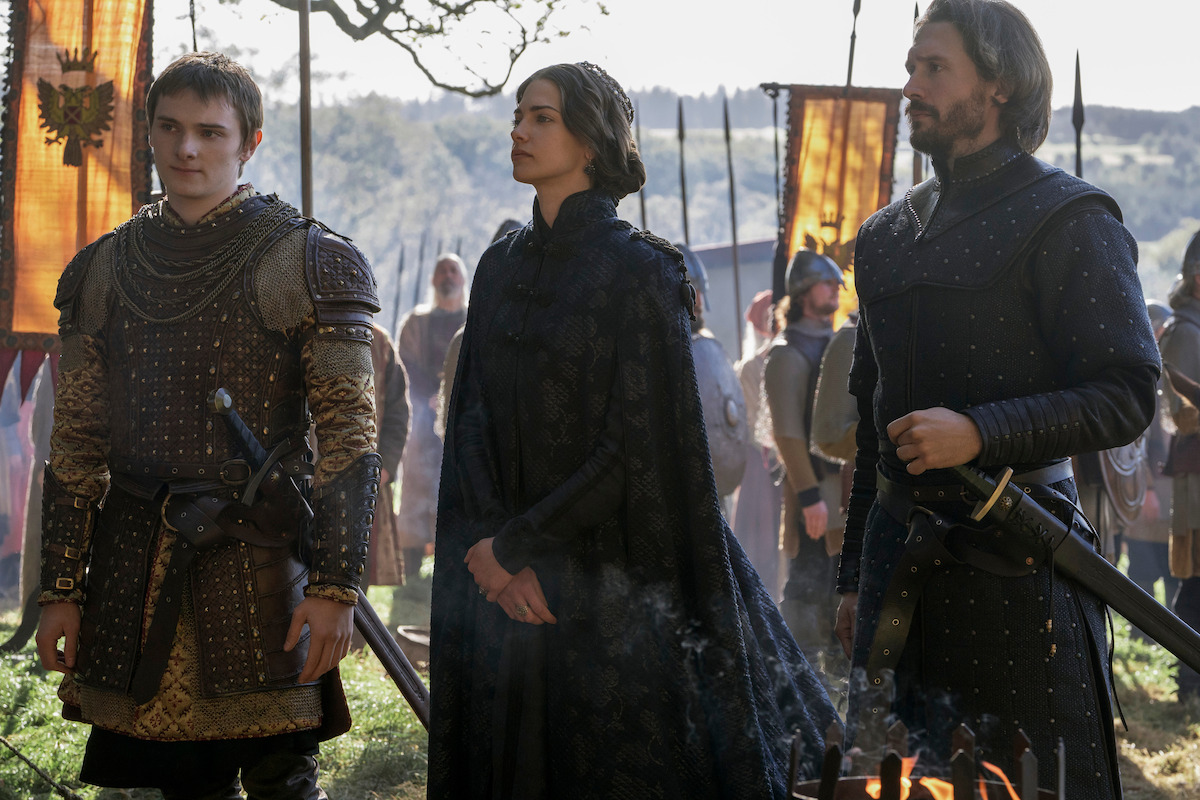
Emma is known to have been a strategist. We do know that Canute was smitten, not only by her beauty, but by the fact that she had come over as a Norman girl and integrated into the Saxon society successfully enough that she owned property and was incredibly wealthy and had a lot to lose if the Vikings won. I’d be naive to think that she didn’t marry Canute to kind of preserve her wealth. But at the same time, we do know that their marriage really was driven by love at a certain point. It was a second marriage for both of them. And yet a powerful marriage that came out of.
In terms of leading armies, there’s no evidence that Emma ever mounted a horse and led an army, but she clearly was able to direct the strategy against the Vikings. And she was Norman, which I always found fascinating. She had that Norman blood in her stream, which is Viking blood. And the Normans are a unique people at this particular time, in that they’re far enough from their Viking roots that they’re not really Vikings. And yet they’re not French. They’re a very tough people, and she came from a pretty tough group, so I think that appealed to Canute as well.
Why was there such a struggle between the Christians and the Vikings?
The struggle, at least in my series, isn’t necessarily Christians and Vikings, as much as Christian Vikings versus pagan Vikings. To understand that, you kind of have to understand how Christianity came into Scandinavia. It was the last part of Western Europe to really be Christianized.
Part of converting [to Christianity], especially in the time period of my show, was to pass along the lineage of your family. Let’s say in the eighth and ninth centuries I could be Ragnar Lothbrok. But if my kids couldn’t fight their way out, then it didn’t really matter very much — somebody else would take over. Somebody else would be the king. And one of the great things that the Christian missionaries started selling to these Viking kings in Norway was, “Hey if you come over to Christianity, there’s this really cool thing we do down in France and in other parts of Western Europe where you can pass the kingship down to your son.”
And so they liked it from a political point of view. I don’t think that someone like Olaf Haraldsson, who became the first Scandinavian saint, really had a firm grasp on some of the tenets of Christianity, like the Trinity, the father son, and holy ghost. I don’t think Olaf could have told you the differences in that. There’s no real evidence that he was that type of Christian. But we do know that the Vikings saw the value of Christianity. And there was some prestige to it, as we move into the middle and latter parts of the 11th century. We know this from when Canute went to Rome and had an audience with the Pope. Canute built churches. He clearly thought he was currying favor with the Roman Catholic church at that particular time. He wanted to be seen as a king and a ruler who was alongside the French kings and of others in Western Europe.
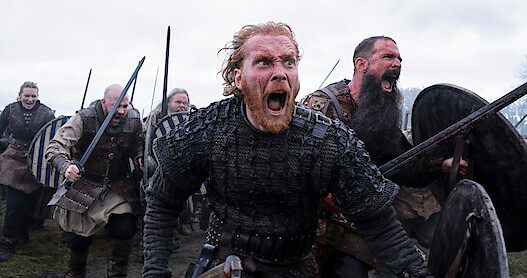
It took a long time for true Christianity to really take hold. It took more than two or three or four generations [for Vikings to] suddenly say they understood and grasped all the tenets of modern Catholicism. The old ways died hard in Scandinavia.
We see religion represented in some of the weaponry... What do the rune engravings on Freydís’ sword mean?
It says: “Keeper of the Faith.” But of course the sword is fictitious.
How do we know what Vikings looked like? And regarding their beards and haircuts, did you leave that all accurate for the series or did you expand upon it?
I do know that there are lots of examples. There are coins with Canute’s likeness on them. It’s not like there’s portraiture, but there are rough versions of what he looks like, based upon descriptions of him. Emma’s biography describes him. And she’s of course [represented] in the Bayeux Tapestry.
[Emma’s biography] describes Canute in glowing fashion, as you would imagine she would describe her husband. It makes her look good too, if she’s married this incredible hunk, and that’s how he comes off in it.
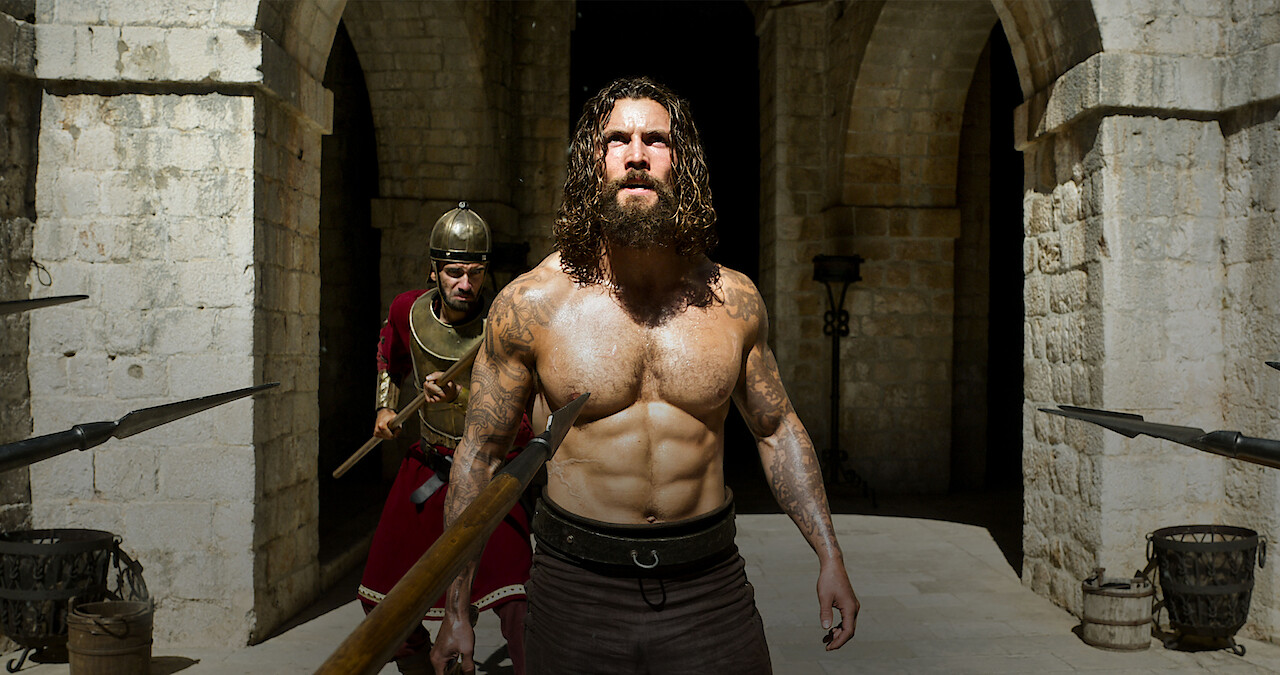
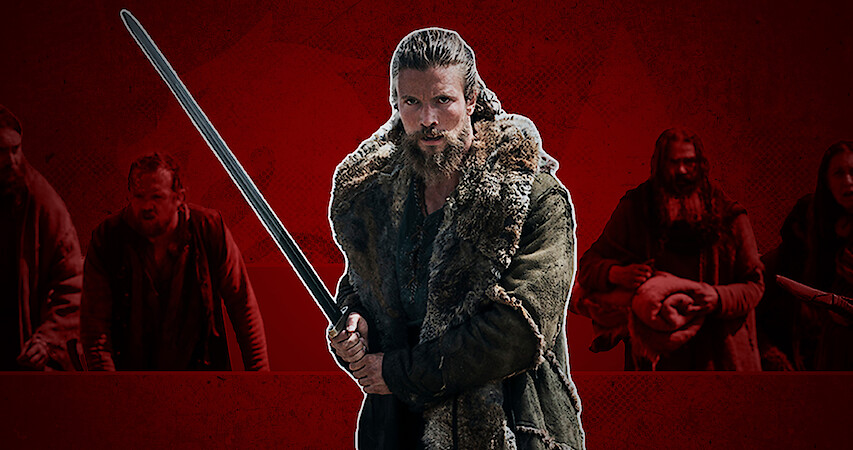
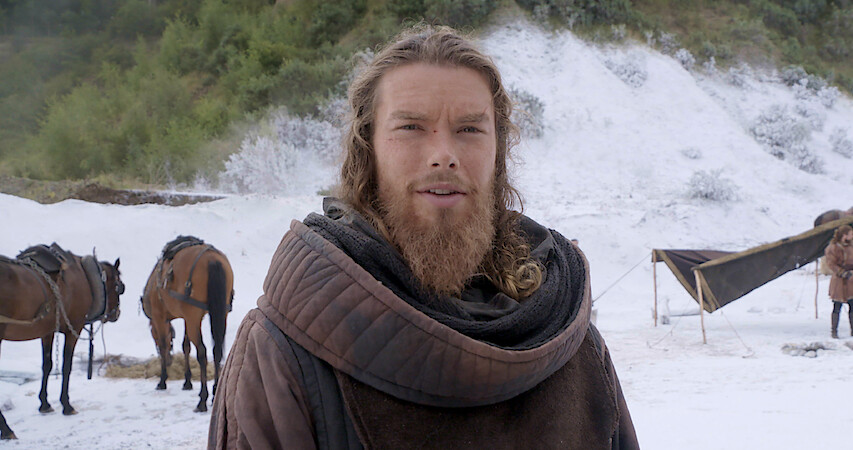
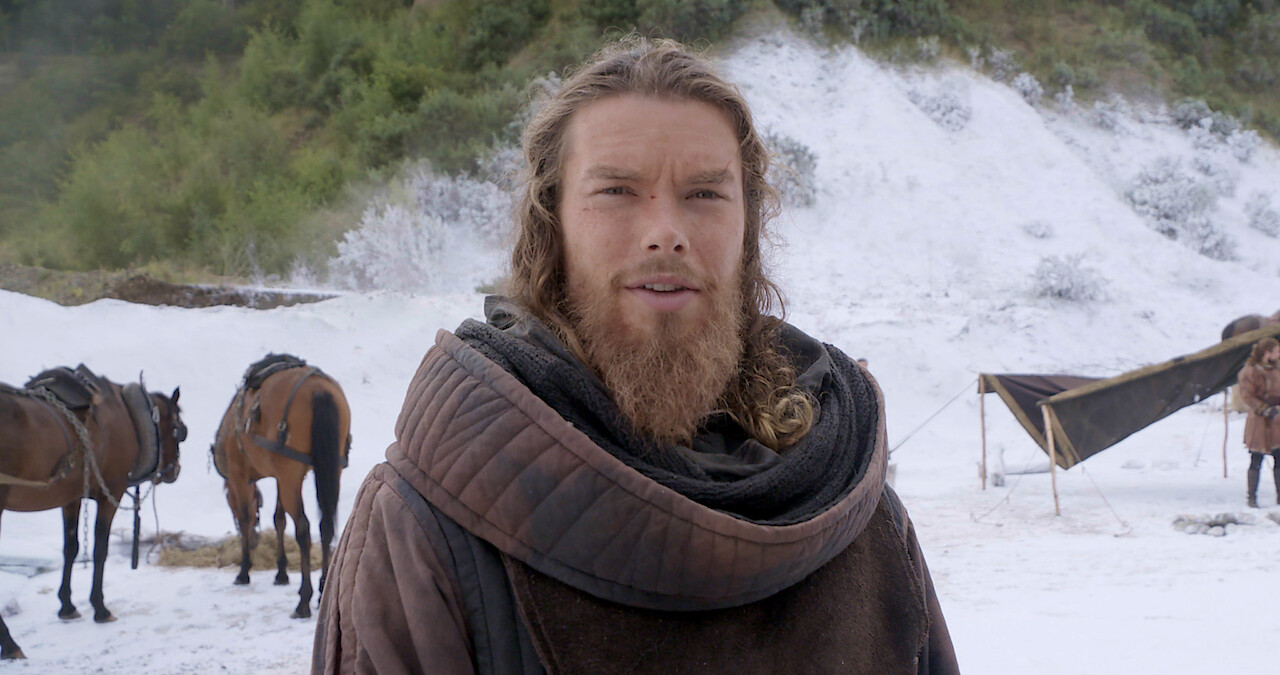
I remember obsessing over everybody’s look in Season 1. Are we going to shave Canute’s head? Is Harald going to have a ponytail or a top knot? How long is his beard going to be? Are we going to braid Freydís’ hair? I did think that Leif’s look needed to be very stylish.
My hair and makeup people are experts. I mean, they have dug really deep. This is what they do night and day. So if I came back and said, “I want this,” and they said, “Hey, Jeb, that didn’t happen until the 14th century or the 13th century,” then I’m not doing it. It has to pass their sniff test. I’m so fortunate to have people that truly have done the homework on this.
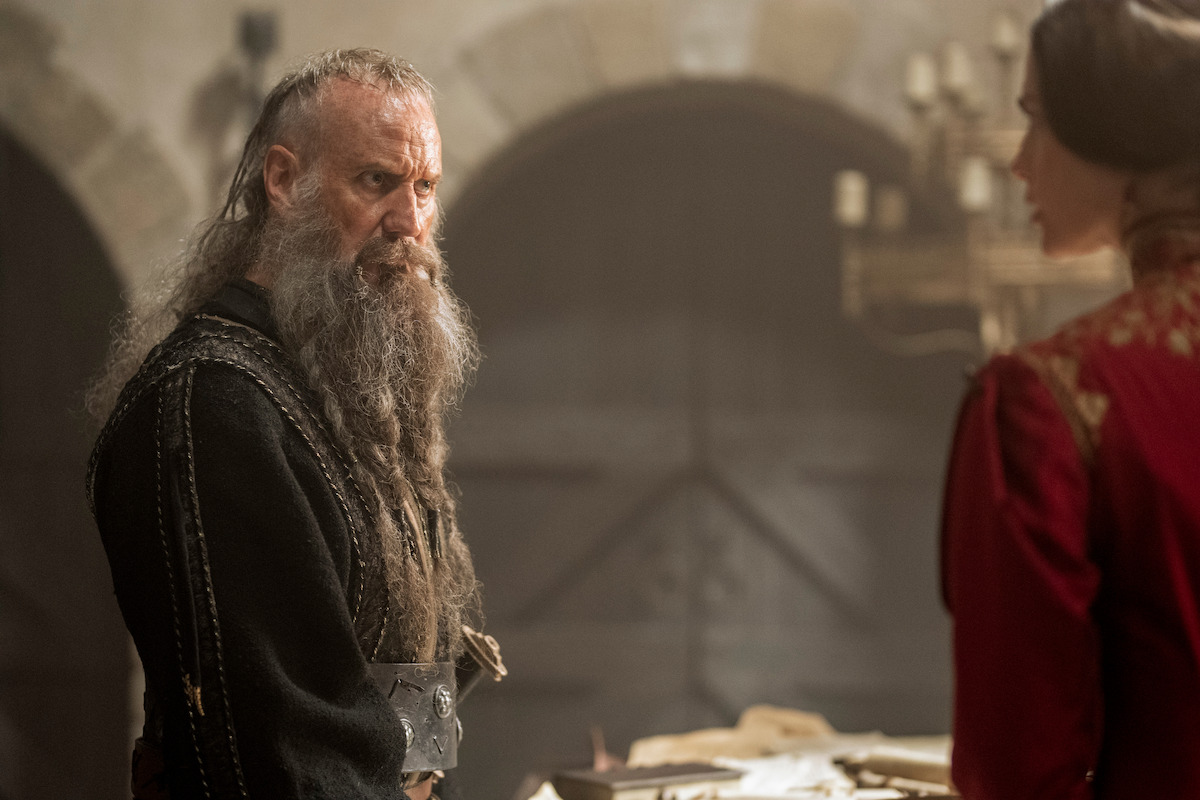
Forkbeard was a really fun character to play with in terms of what does a Forkbeard look like? The idea was that it was always two prongs, and I can remember Tom McInerney, who handles all our beards saying, “Who says a fork has to have two prongs? It could have three or four prongs.” And suddenly when you start thinking about that, and maybe do you consider his mustache part of the prongs, and how do we make that work? That was really, really cool to kind of go into, and to create this terrifying Viking image that we’ve never seen before.
Why did the Viking empire eventually end?
Most historians consider the year 1066 and the Norman Invasion as the end of the Viking era. Historically speaking, the Viking raids began to tail off after this date.
This interview has been edited and condensed for clarity.