Policing in the US can serve as a sort of Rorschach test: Are the cops a corrective force necessary to combat criminals? Or a hotbed of corruption whose unchecked authority poses a threat to disadvantaged communities? Power, the new documentary by director Yance Ford, addresses these tough questions while carefully considering how policing as we know it came to be.
The subject has interested Ford for decades, a fascination he traces back to the murder of his brother in 1992. He first explored it in his Academy Award-nominated 2017 documentary Strong Island, which revisits a grand jury’s failure to indict the man who committed the crime.
“On some level, I’ve been thinking about the police for 30 years,” Ford tells Tudum, noting that the wellspring of conversation, protests, and police crackdowns during the spring and summer of 2020 led him to reconsider the overall purpose of policing. “In the aftermath of the murder of George Floyd, I was seeing something different here in New York and around the country.”
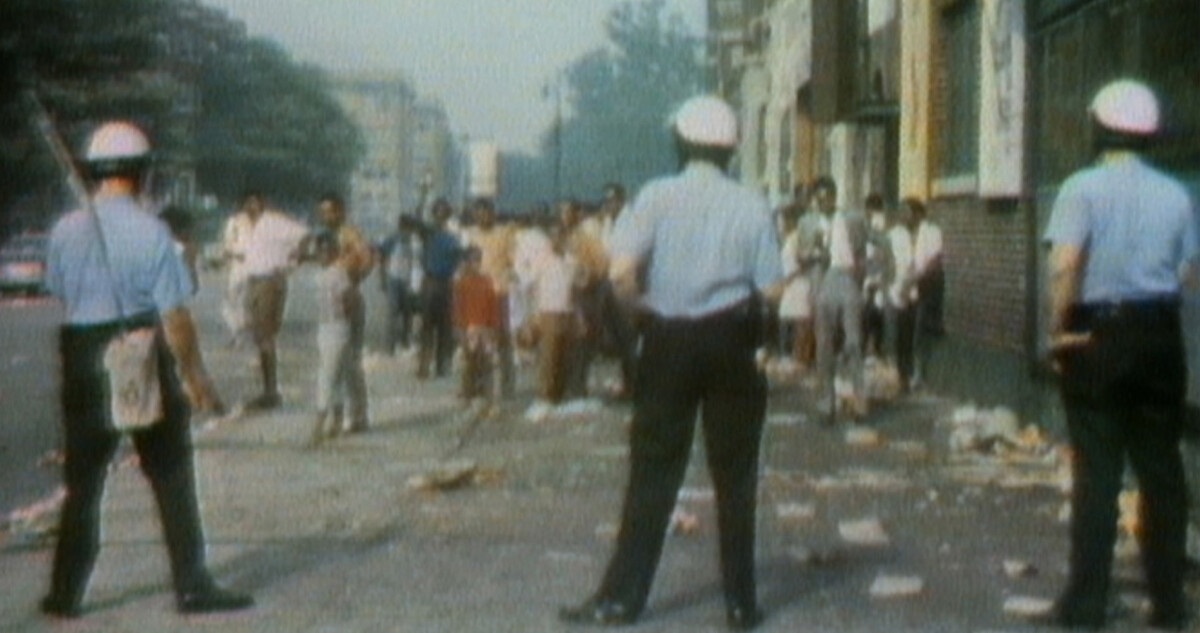
In Power, Ford examines the history of American policing in order to see what its future may hold. The slave patrols created in the 1700s to track down enslaved persons; the often violent police suppression of the Civil Rights movement; and more recent wrongful deaths rhyme in ways that are difficult to ignore within a deeply entrenched framework of violent racial inequity. Yet in many communities throughout the country, the police are seen as a necessary bulwark against the threat of crime and disorder. The documentary allows this contradiction to drive the narrative forward, with insights from scholars and critics of the police alongside those of law enforcement officers and civilians whose lives have been negatively affected by policing.
Below, Ford talks to Tudum about how he structured Power, what got left on the cutting room floor, and how his thinking about policing has changed since wrapping the film.
What was your initial strategy for tackling a topic that can trigger a knee-jerk reaction for a lot of people?
I knew that I needed to get above the contemporary debate about policing. I wanted to get to a 30,000-foot view of the institution and ask foundational questions. When did policing start? What were their responsibilities and roles? Why did policing begin in the United States? When I decided to take this more sweeping institutional look at policing, that’s when things sort of naturally fell away from the film — even though we must have had a hundred or so cards on the wall with different themes and questions and moments in history, all sorts of little nuances about the story of policing and its evolution in the States.
There’s archival footage in the doc that argues that policing is a biological inevitability. Are there any links between American and British policing because of the colonial history of the United States?
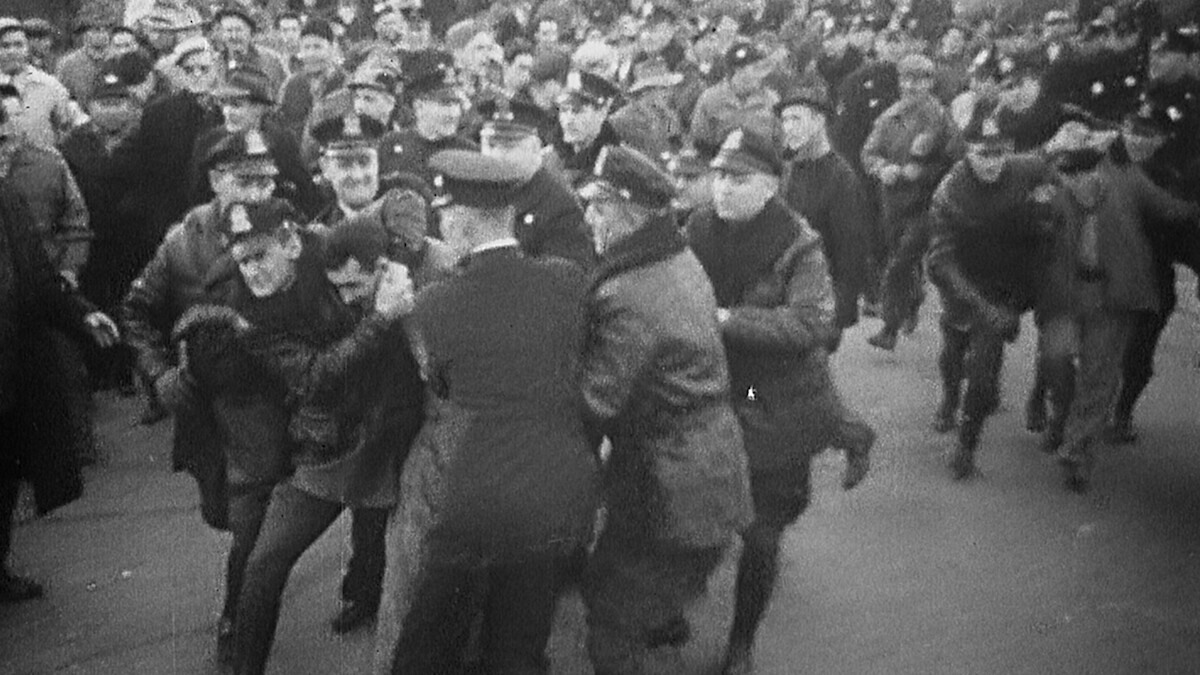
I think that it’s fair to say that American policing is really its own beast. Some people talk about the constables and the way that the constable may or may not have been transplanted to colonial America, but the evidence and scholarship that we found really did point to three points of origin: the slave patrols in the South trying to put down rebellions by enslaved people, and make sure that people weren’t escaping plantations; using the military as a police force to clear Indigenous people from their land as the country expanded West; and using police to break unions and to police immigrants who were not yet considered white in Northeastern cities — the Irish, the Italians, the Greeks. We take those points of origin and we follow them over the course of our history to see how they converge and become what we now recognize as American policing.
How did you assemble your lineup of commentators?
All of our experts are very informed, but at the end of the day, I think they wind up landing in different places about policing and what needs to be fixed. The one point of view that we don’t have in the film that I wish we had been able to include is: people who’ve been doing abolitionist work for a long time and who have been imagining –– within communities –– what public safety means for them, what alternatives to policing as the first response to community challenges can be.
The use of voiceover commentary throughout this documentary was really interesting. How did you think about using it to complicate or clarify certain issues as the film progresses?
I started out with just the opening narration. The whole positioning of the film is that it’s something that you would either be curious about or suspicious of, based on however you’re inclined to approach things about policing. Then I was encouraged by just about everybody who saw the rough cut of the film to do more of it. I was like, “I don’t want to do more voiceover. I don’t want to listen to myself talk, thank you very much,” but it was the right thing for the film, and those folks were right. I started thinking about how Power could be an essay as well as a historical document that would use my voice to ask questions, like: Is your America and my America the same place? All of these things that were sort of at the back of my mind throughout the making of the film for me suddenly became part of the text.
There are certain moments in Power when archival footage of police brutality is obscured in some way. How did you decide which clips would be shown in their entirety or not?
On the whole, it was an incident-by-incident decision about how to mitigate the violence so that, by the end of the film, it wouldn’t leave the audience feeling like it had been run over by a truck. All of those scenes in their entirety — having seen all the material myself — would have left everybody flat and unable to respond to the movie, and that’s not what you want.
We chose to obscure the George Floyd murder in a way that completely blots out Mr. Floyd on the ground, but also as a result, highlights the officer and the two people who were demanding that he check Mr. Floyd’s pulse. In that way, one of the things that we achieved was this focus on who was complicit in Mr. Floyd’s murder and who had power to intervene but chose not to.
Were there particular elements of your research that surprised you about the history of policing?
I know that there are ethnic white populations that came to the United States that weren’t considered white, like the Irish and Italians and Greeks, but I didn’t realize that the police were deployed to keep those populations in their place, that they were deployed specifically to keep those people from unionizing at factories where they worked in the Northeast. I think it’s really important that we put that in the film, so that folks who are now part of the ethnicities that make up the majority of American police forces can see that at some point in the history of their family, their ancestor was on the receiving end of the kind of treatment that police so readily dole out to communities of color and poor communities in this country.
On a separate note –– it’s not that I hadn’t realized that this had been happening, but I just hadn’t realized that it had gone so far back –– but the policification of the military. The way in which our military gets deployed –– not fighting wars with sovereign powers over national security or national defense –– but as policing operations. At the end of the day, Vietnam was a policing operation, our occupation of the Philippines was a policing operation. That helps the closure of the space between our police and military make a lot more sense.
How did you connect with the police officer that you end up following throughout the film?
Charlie Adams is a really great example of what it means to be well-intentioned but also caught within the machinery of an institution that’s larger than you. One of our producers is actually from Minneapolis, and we actually identified Charlie Adams in our research phase just from her talking with people on the ground.
How do you hope people take the knowledge from this film and do something with it?
I think in a perfect world, the film would move through our culture and have people begin to articulate for themselves: What is the demand I am going to make of policing? There frankly have been people who have been making demands of American policing for years and years, and their voices have fallen on deaf ears. If American policing is the manifestation of state power, as I believe it is, [then] I think that the state has to be accountable to the people.
We need to demand new things, and we need to demand urgency, and we need to stop falling for the boogeyman politics of folks who talk about the police being defunded and you being in danger — because one of the things the film shows is that the police have actually never lost funding under Republican or Democrat presidents since Lyndon B. Johnson. The police have enough money.
Has your own demand of American policing changed from when you started making this film to having completed it?
I think at the beginning I was sort of in filmmaker mode. I was like, “What is this? I need to figure this out.” Now I’m learning more about the work that people have been doing to create an alternative to policing. You can throw the same solution at a problem over and over again and the problem will not be solved. We need to start throwing different solutions at the problems that we have, and they cannot be limited to police.
Watch Power on Netflix on May 17.